
Security teams rarely fail because they have no findings. They fail because they have too many findings, too little context, and not enough time to fix everything.
Cloud services, SaaS tools, APIs, remote access systems, and temporary environments can all expand the attack surface. New assets appear, old test systems stay online, permissions drift, and a harmless-looking misconfiguration can become an easy entry point. A vulnerability scan may show hundreds of issues, but it does not always explain which ones are reachable, exploitable, connected to critical systems, or already being used by attackers.
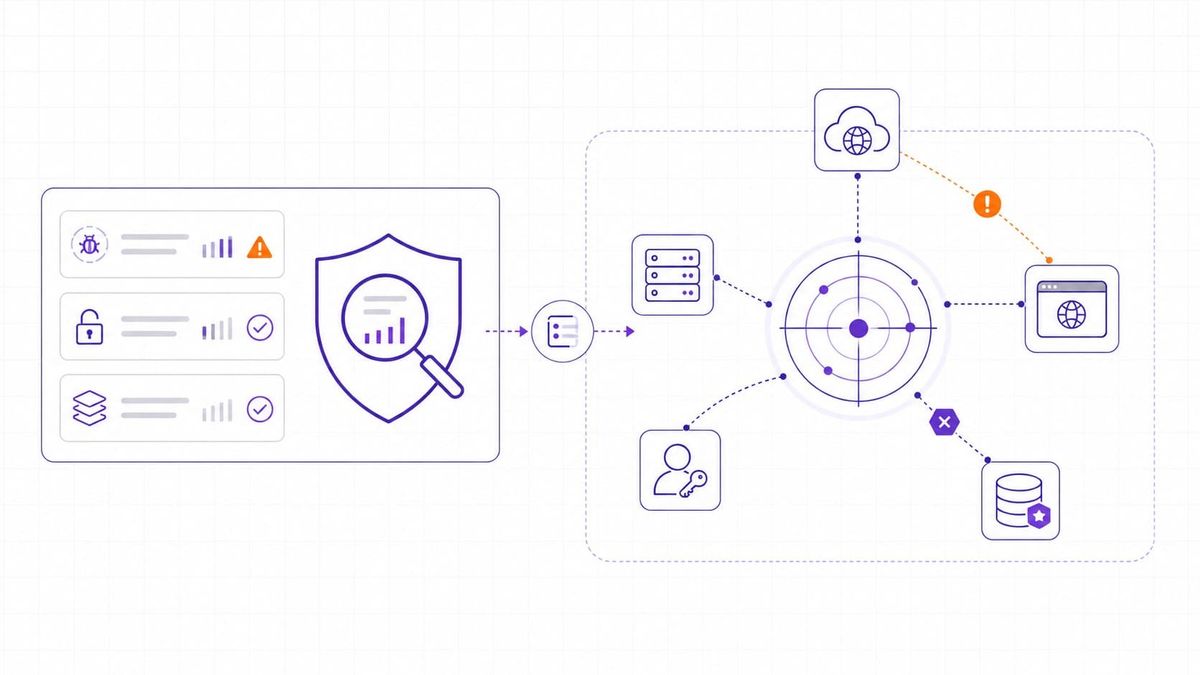
Exposure management looks at risk from the attacker's point of view. It connects asset discovery, vulnerability data, configuration state, identity access, exploit evidence, and business impact into one operating question: what can attackers actually use, and what should we reduce first?
Exposure Management in Cybersecurity
Exposure management is the ongoing work of identifying, prioritizing, and reducing weaknesses that create attack opportunity. It covers vulnerabilities, misconfigurations, exposed services, over-permissioned identities, unknown assets, cloud resources, APIs, and third-party connections.
The word exposure matters. A weakness moves up the queue when an attacker can reach it, use it, and turn it into impact.
For example, a high-severity vulnerability on an isolated lab host may be less urgent than a medium-severity flaw on a public authentication service. A storage bucket with sensitive data may outrank ten low-impact findings on a retired test server. Exposure management gives teams a reasoned way to make those calls.
It combines asset inventory, vulnerability findings, configuration state, identity and access data, threat context, and business impact. The value comes from connecting those signals. A CVE means more when the team also knows whether the affected system is public, who owns it, whether exploitation is likely, and what would happen if it were compromised.
NIST SP 800-137 is not an exposure management framework by name, but it supports the same operating principle: security teams need ongoing visibility into assets, vulnerabilities, threats, and control effectiveness so they can respond to risk in time.
Exposure Management Has Become Critical
Infrastructure now changes faster than many security processes. A quarterly assessment can miss a cloud endpoint created yesterday. A static asset list can omit a forgotten staging API. A patching queue sorted only by severity can bury the issue attackers are most likely to try.
Several trends push teams toward exposure management:
- Internet-facing assets change constantly - teams add subdomains, APIs, cloud endpoints, and test environments faster than static inventories can capture them.
- Cloud and hybrid systems create dynamic access paths - a firewall rule, IAM change, or temporary workload can make a previously low-risk system reachable.
- SaaS and third-party integrations expand the boundary of the organization - sensitive data and administrative access may sit outside infrastructure the security team directly controls.
- Attackers use automation to find exposed services quickly - a forgotten panel or vulnerable edge service can be discovered soon after it appears online.
- Security teams cannot remediate every finding at the same speed - exposure management gives them a defensible reason to fix reachable, exploitable, high-impact issues first.
Exposure management is a focus mechanism. It does not mean ignoring lower-priority findings forever. It means using context to decide what reduces the most risk now.
This is closely related to attack surface management, but the scope is broader. Attack surface management asks what attackers can see or reach. Exposure management asks which reachable weaknesses can create meaningful risk and how to reduce them.
Cyber Exposure Management Workflow
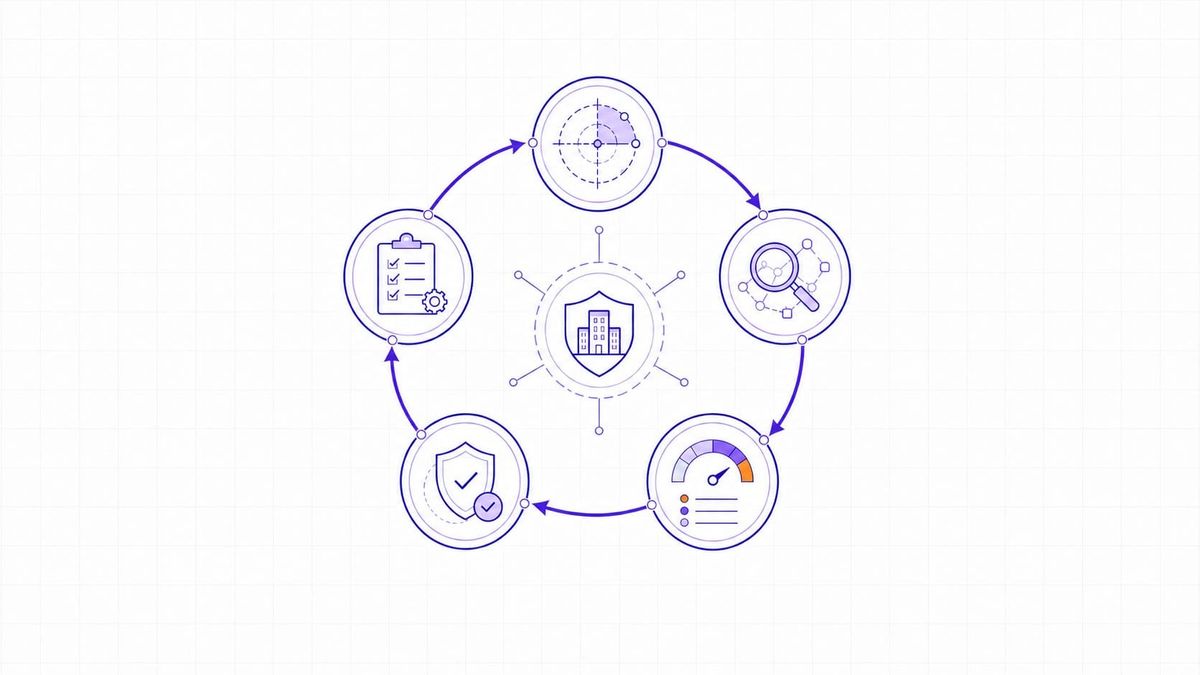
An exposure management workflow has six basic steps. The point is not to draw a lifecycle diagram; each step should produce a decision the team can act on.
| Step | What to check | Decision it supports | Good exit criterion |
|---|---|---|---|
| Discover | Domains, IP addresses, subdomains, APIs, cloud endpoints, exposed services, identities, and integrations. | Should this asset exist, and who owns it? | Every high-risk external asset has a documented owner or a retirement plan. |
| Assess | CVEs, missing patches, misconfigurations, open ports, weak authentication, and excessive permissions. | What weakness exists, and how could it be exploited? | Every finding is mapped to a specific asset, service, and owner. |
| Enrich | Public reachability, asset criticality, exploit evidence, EPSS, CISA KEV status, data sensitivity, and compensating controls. | Is this a real exposure or a lower-priority hygiene issue? | The priority can be justified using multiple risk factors, not CVSS alone. |
| Prioritize | Reachability, likelihood of exploitation, business impact, attack path, remediation complexity, and SLA requirements. | Which issues should be addressed first this week? | The remediation queue is short enough for the team to execute effectively. |
| Remediate | Patch or upgrade systems, restrict access, rotate credentials, remove stale assets, and correct insecure configurations. | Which action reduces the most risk with the least delay? | The asset owner has implemented a concrete fix or an approved mitigation. |
| Verify | Rescan results, external reachability, configuration state, access reviews, and recurrence checks. | Has the exposure actually been eliminated? | The same exposure is no longer reachable or exploitable in its operational context. |
The workflow should keep pace with change. When a new service appears, exposure should be recalculated. When CISA adds a vulnerability to the Known Exploited Vulnerabilities catalog, affected assets should move up the queue. When a fix is applied, the team should verify that the exposure is closed rather than assuming the ticket solved the risk.
For teams already running vulnerability scanning, exposure management adds reachability, exploitability, ownership, and impact. The scan still matters, but it becomes one input rather than the whole decision model.
Types of Exposure Organizations Need to Manage
Exposure is not limited to CVEs. Most real environments contain several exposure types at once.
Asset-Based Exposure
Asset-based exposure comes from systems and services that are not tracked, owned, or monitored well enough. Examples include forgotten subdomains, old staging environments, unmanaged cloud resources, public APIs, expired certificates, and external services that no longer have a clear owner.
Unknown assets are especially risky because they fall outside normal patching, logging, and access review. The first remediation step is often simple: identify the owner and decide whether the asset should exist at all.
Vulnerability Exposure
Vulnerability exposure exists when a known software weakness affects a system that attackers can realistically reach or use. This is where CVE, CVSS, EPSS, KEV status, exploit availability, and asset context all matter.
CVSS helps describe technical severity, but it is not enough by itself. FIRST describes EPSS as a data-driven model that estimates the probability that a published CVE will be exploited in the wild in the next 30 days.
Configuration and Misconfiguration Exposure
Configuration exposure happens when a system is deployed in a risky state. Common examples include public storage, open management interfaces, weak encryption settings, default credentials, permissive security groups, and unauthenticated admin panels.
Misconfigurations often create direct exposure because they change what outsiders can reach. A secure application behind a private network may become risky if a firewall rule exposes it to the public internet.
Identity and Access Exposure
Identity exposure appears when users, service accounts, API keys, or machine identities have more access than they need. It can include stale accounts, weak authentication, missing MFA, over-privileged cloud roles, or long-lived credentials.
This exposure type matters because attackers often use identity to move through an environment. Reducing permissions, removing unused accounts, and monitoring privileged access can lower the blast radius even when a technical vulnerability still exists.
External Attack Surface Exposure
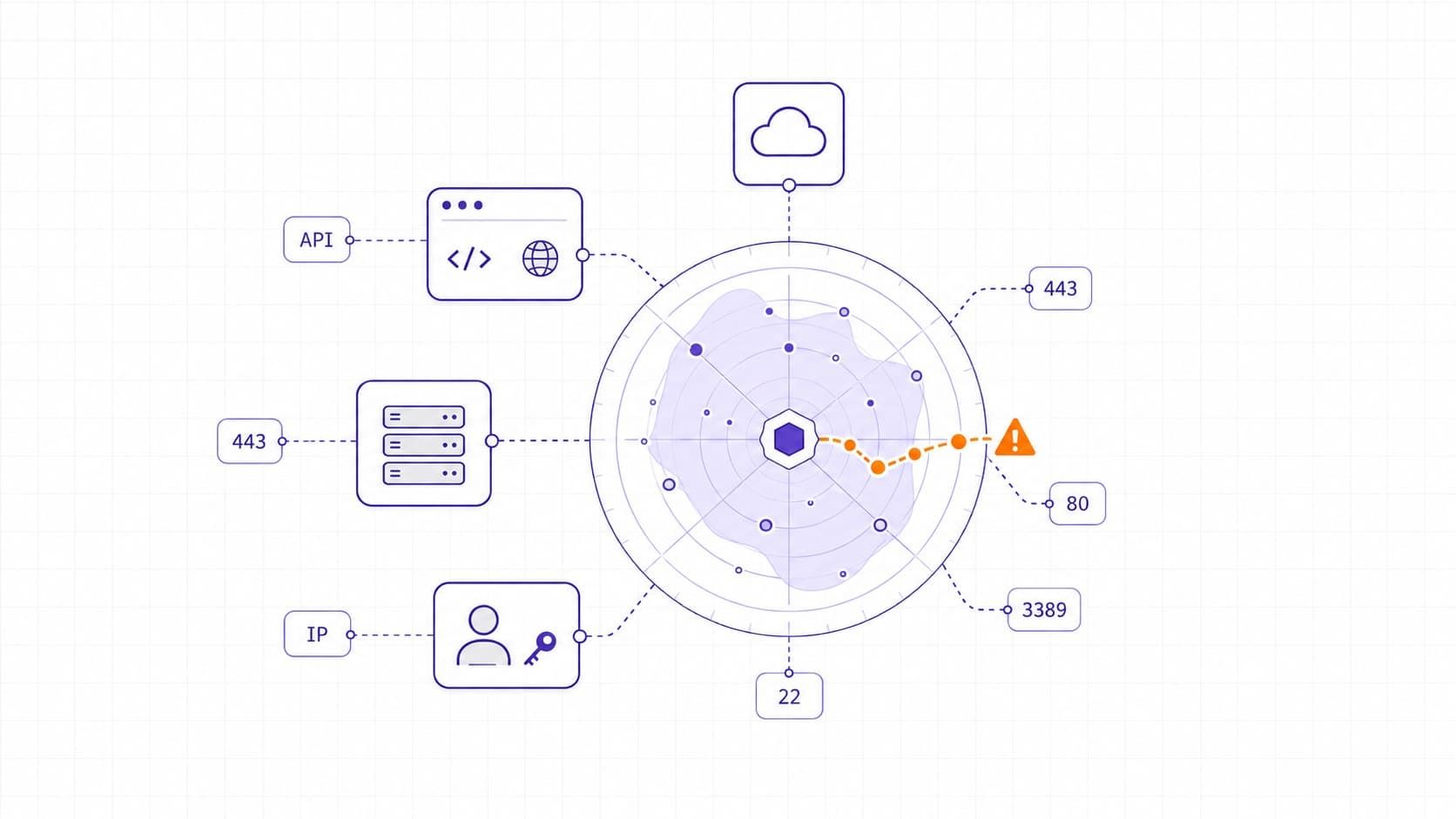
External exposure includes everything reachable from outside the organization: web apps, VPNs, open ports, APIs, cloud endpoints, certificates, DNS records, remote access tools, and third-party systems tied to the organization.
Our related guide on attack surface management vs vulnerability management explains why external visibility and remediation workflows need to work together. Discovery without remediation leaves risk open. Remediation without discovery misses assets outside the known scope.
Third-Party and Supply Chain Exposure
Third-party exposure comes from vendors, integrations, SaaS permissions, shared data flows, managed service providers, and dependencies. These connections can create risk even when internal systems are well managed.
This is not about treating every vendor as a breach waiting to happen. It is about knowing which external relationships can reach sensitive data, production systems, customer environments, or administrative functions.
Exposure Management and Vulnerability Management Compared
Exposure management and vulnerability management overlap, but they are not the same discipline. The difference matters most when a team has more findings than it can fix immediately.
| Situation | Vulnerability management answer | Exposure management answer | Practical decision |
|---|---|---|---|
| A critical CVE appears on an internal test host | Patch or mitigate the issue based on its severity and the applicable SLA. | Evaluate network isolation, exploit evidence, asset ownership, and whether the host can reach sensitive production systems. | Remediate within the SLA, but do not prioritize it above a reachable production exposure without considering the surrounding risk context. |
| A medium-severity CVE affects a public authentication service | Track the affected version, available patch, and remediation status. | Treat internet exposure and business impact as factors that significantly increase priority. | Move the issue near the top of the remediation queue and verify the fix after deployment. |
| A forgotten staging API is discovered on the internet | The asset may never have been scanned if it was outside the defined scope. | An unknown internet-facing asset is an exposure until it is assigned an owner or removed. | Assign ownership, assess the asset, restrict access if necessary, or retire it. |
| A cloud role has excessive permissions but no associated CVE | The issue may fall outside a traditional vulnerability management workflow. | Identity exposure can enable lateral movement or unauthorized access to sensitive data. | Review and reduce permissions before the exposure becomes part of an attack path. |
| A scanner reports hundreds of low-severity findings | Create remediation tickets or backlog items. | Group findings by asset, reachability, recurrence, and business context. | Prioritize fixes that reduce exposure across many assets instead of addressing findings one by one. |
Vulnerability management remains essential. Teams still need to identify, assign, patch, mitigate, and verify weaknesses. Exposure management sharpens that work with external visibility and risk context.
A good way to think about it:
- Vulnerability management says, "This system has a weakness." It identifies the flaw, affected version, severity, owner, and remediation path.
- Attack surface management says, "This system is visible or reachable." It checks whether the asset appears from the outside and whether it belongs in the external inventory.
- Exposure management says, "This reachable weakness can create impact, so fix or reduce it first." It combines the weakness, reachability, exploit evidence, and business context into a priority decision.
How Exposure Management Prioritizes Risk
Exposure management prioritizes risk by combining technical severity with real-world context. The exact model varies by organization, but mature programs look at five factors.
Asset Reachability
Public-facing systems, remote access services, exposed APIs, and cloud endpoints deserve closer review than isolated internal systems. Reachability does not automatically make a finding critical, but it changes the urgency.
Exploitation Likelihood
Exploitability depends on more than theoretical severity. Teams should consider whether exploit code exists, whether exploitation is being observed, whether the vulnerability is listed in CISA KEV, and whether EPSS suggests a higher probability of exploitation.
CISA's Known Exploited Vulnerabilities catalog focuses on vulnerabilities with evidence of active exploitation, which makes it a strong signal for remediation priority.
Business Impact
Asset value matters. A medium finding on a production identity provider may deserve faster action than a high finding on a disposable test host. Sensitive data, customer-facing systems, privileged access, revenue impact, and regulatory exposure should all influence priority.
This is the difference between a vulnerability and a risk. Our article on threat, vulnerability, and risk explains that relationship in more detail.
Attack Path Context
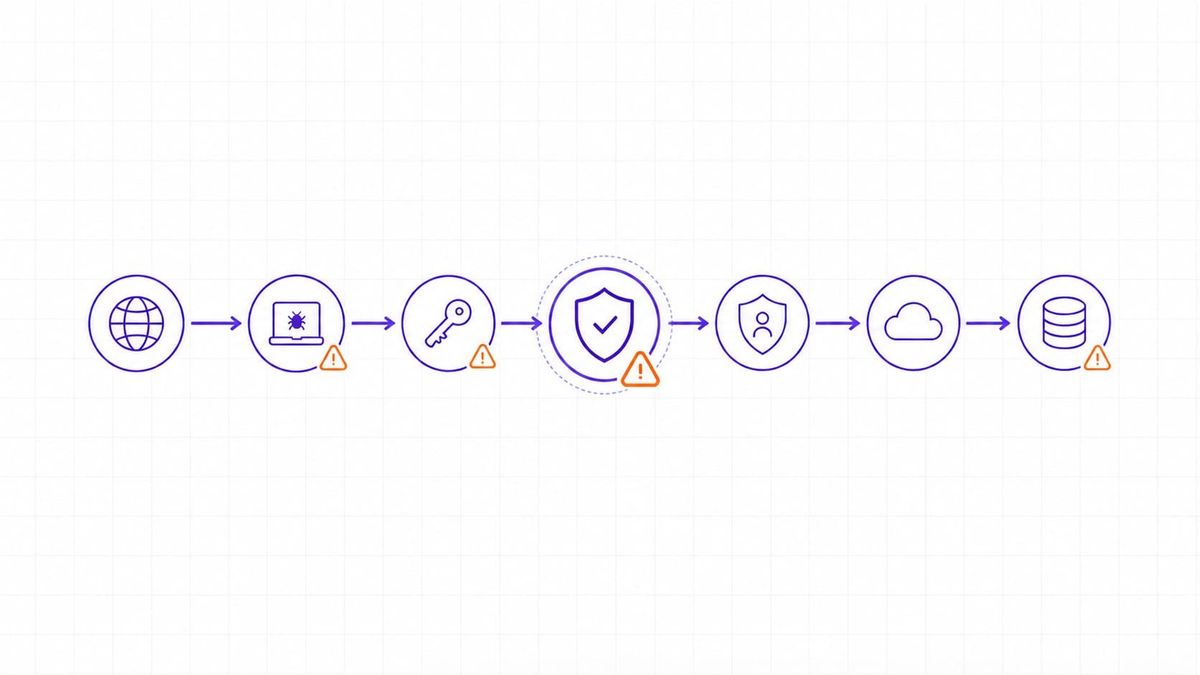
Attack paths show how several small issues can combine. A public endpoint, weak credential, over-privileged service account, and unpatched internal service may be more dangerous together than any one finding looks alone.
Exposure management should identify these chains so teams can break them at the most efficient point. Sometimes the best fix is not the hardest patch. It may be removing public access, disabling an unused account, or restricting a management interface.
Verification
Priority should include whether remediation can be confirmed. If a team closes a ticket but never rescans or validates the change, the exposure may remain open. Verification turns security work into measurable risk reduction.
Data and Enrichment Turn Findings into Decisions
Raw findings do not explain risk. Enrichment adds meaning.
Enrichment worth adding includes:
- Asset owner and business function - a finding is harder to fix when nobody knows which team owns the service or what business process it supports.
- Public or internal reachability - the same vulnerability carries different urgency on a public login endpoint than on an isolated development host.
- Production, staging, or development status - environment labels help separate customer-facing risk from test systems, while still catching test assets that are accidentally public.
- Data sensitivity - systems that store customer data, credentials, source code, or financial information should move higher in the queue.
- Known exploit activity - observed exploitation, public exploit code, and attacker scanning can turn a theoretical weakness into an immediate remediation item.
- EPSS probability - EPSS gives a data-driven view of how likely a published CVE is to be exploited in the wild within a near-term window.
- CISA KEV status - KEV entries deserve attention because they are tied to evidence of active exploitation, not just severity.
- Compensating controls - network restrictions, MFA, segmentation, or a web application firewall may reduce urgency, but they should be documented rather than assumed.
- Ticket owner and remediation SLA - priority only matters if the finding moves to a person or team with a clear deadline.
- Previous recurrence of the same issue - repeated misconfigurations may point to a broken template, deployment process, or ownership gap rather than a one-off mistake.
This context reduces two common mistakes: fixing everything in scanner order and reporting raw finding counts as if they equal risk. A short, well-explained queue often beats a large export of unranked findings.
Exposure Management in Cloud and Hybrid Environments
Cloud and hybrid environments make exposure management harder because assets are dynamic and access paths are more complex. Virtual machines, containers, serverless functions, storage buckets, APIs, and cloud identities can appear quickly. Infrastructure-as-code can repeat the same misconfiguration across many resources.
Teams should pay close attention to:
- Public cloud storage and databases. A single public bucket, snapshot, or database endpoint can expose sensitive data even when the application itself is patched.
- Internet-facing load balancers and APIs. These are common entry points, and they often hide several services behind one public address.
- Security groups and firewall rules. A broad rule can change exposure instantly, especially when it allows management ports or database access from the internet.
- Exposed management ports. SSH, RDP, admin consoles, and control panels should be restricted because they give attackers a direct path to privileged access.
- Unused or over-privileged IAM roles. Excessive permissions can turn a small compromise into wider movement across cloud accounts and services.
- Secrets in repositories or build systems. Leaked tokens and deployment keys can bypass the usual network path and give attackers direct access.
- Temporary environments that become permanent. Staging and preview systems often miss the hardening, monitoring, and ownership applied to production.
- Third-party SaaS integrations with broad access. Integrations should be reviewed for data scope, admin privileges, and whether they still serve a business need.
The cloud shared responsibility model also matters. Cloud providers secure the underlying cloud infrastructure, but customers are generally responsible for how they configure workloads, identity, access, data, and applications. Exposure management helps make those responsibilities visible.
How Exposure Management Platforms Help
Exposure management platforms collect and connect signals that would otherwise live in separate tools. A platform may combine external discovery, vulnerability scanning, asset inventory, cloud context, identity data, threat intelligence, and workflow integrations.
The platform features that matter most are operational:
- Continuous discovery of internet-facing assets - the platform should find new domains, subdomains, IPs, services, and cloud endpoints without waiting for a manual inventory update.
- Detection of ports, services, technologies, and version signals - teams need enough detail to understand what is exposed and whether it matches the approved architecture.
- Vulnerability scanning and rescanning - scanning identifies weaknesses, while rescanning confirms whether the fix actually changed the exposure state.
- Grouping and deduplication of related findings - repeated findings across the same asset or service should be grouped so the team fixes the cause, not every duplicate row.
- Prioritization based on exploitability, exposure, and impact - the queue should explain why one item moves ahead of another instead of sorting only by severity.
- Owner assignment and remediation workflow - findings need a destination, a responsible team, and a way to track status, exceptions, and verification.
- Reporting for technical teams and leadership - engineers need fix detail, while CTOs and executives need risk trends, ownership, and evidence that exposure is going down.
For small and mid-sized teams, the useful pattern is a lightweight workflow that keeps external discovery, scanning, prioritization, and verification in one place. TopScan fits that pattern by focusing on internet-facing assets, continuous monitoring, grouped vulnerability findings, and remediation handoff for teams that do not have a large security function.
It should be used as part of day-to-day exposure and vulnerability management: finding what is reachable, showing what changed, and helping teams decide what to fix next.
Getting Started with Exposure Management
Exposure management does not require a large program on day one. Start with a small workflow that produces visible risk reduction.
Build a Current External Inventory
Begin with what attackers can see: domains, subdomains, IPs, web apps, APIs, VPNs, exposed ports, certificates, and cloud endpoints. Assign owners where possible. Unknown assets should become known, retired, or placed under management.
Connect Vulnerability Findings to Assets
Run scans against the assets that matter most, especially internet-facing and business-critical systems. Link findings to owners, systems, and environments. A finding without an owner is unlikely to be fixed quickly.
Add Threat and Exploit Context
Use sources such as CISA KEV and EPSS alongside CVSS. This helps separate "severe in theory" from "likely to be used soon." Do not use any one score as the entire model.
Define a Simple Priority Rule
A lightweight rule is enough to start:
- Fix actively exploited vulnerabilities on public or critical assets first. These issues combine attacker interest, reachability, and impact, so they should not wait behind routine backlog work.
- Reduce exposed management interfaces and public misconfigurations. Closing an admin panel, restricting a port, or fixing a public storage setting can remove an entire attack path quickly.
- Address high-impact identity and access issues. Over-privileged roles, stale accounts, and weak authentication can magnify the damage from a smaller initial compromise.
- Patch or mitigate remaining high-severity vulnerabilities by SLA. Severity still matters, but the SLA should account for asset value, exposure, and whether a compensating control exists.
- Track lower-risk findings without letting them hide the urgent work. Low-risk items still need ownership, but they should not crowd out the smaller set of exposures that can create real damage.
Verify and Measure
Measure whether risk is going down, not whether more issues are being found. Useful metrics include exposure dwell time, critical exposures fixed within SLA, mean time to remediate, number of unknown assets discovered, recurrence rate, and validation pass rate after remediation.
Common Mistakes to Avoid
The first mistake is treating exposure management as a dashboard project. A dashboard can show risk, but it does not reduce risk unless findings move into ownership, remediation, and verification.
The second mistake is prioritizing only by CVSS. Severity matters, but exposure, exploit activity, asset value, and attack path context often change the real order of work.
The third mistake is ignoring identity. Many teams focus on hosts and patches while over-privileged accounts, stale keys, and weak authentication remain open.
The fourth mistake is counting findings instead of risk reduction. A team can reduce risk dramatically by closing a few high-impact exposures, even if the total finding counts changes slowly.
The fifth mistake is separating external discovery from vulnerability management. External visibility should feed the remediation workflow. Remediation should be verified from the perspective that matters: can attackers still reach or use the exposure?