
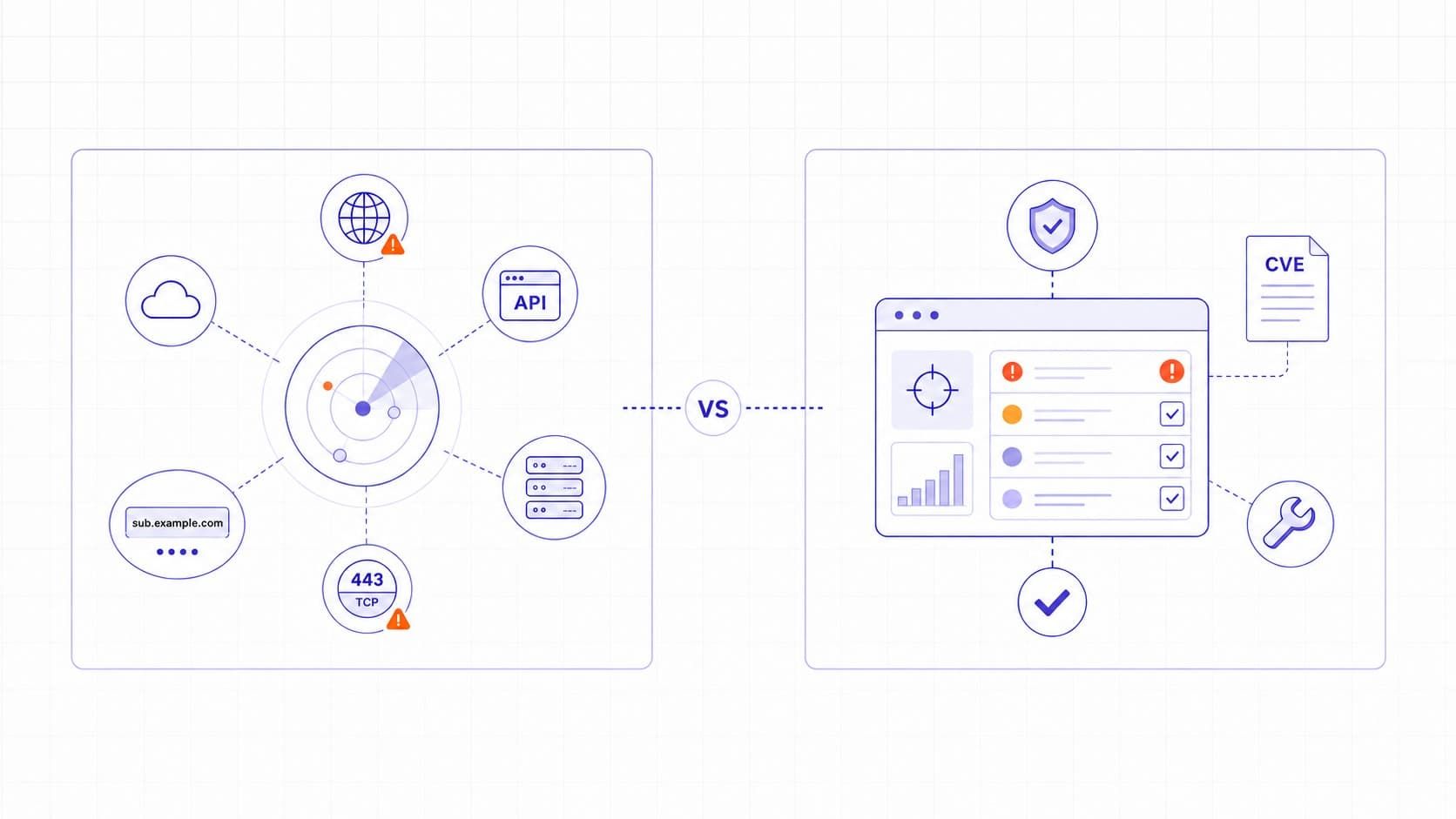
Attack surface management (ASM) and vulnerability management (VM) are closely related, but they answer different security questions.
ASM asks: what does our organization expose to the internet, including assets we may not know about?
VM asks: which known systems have weaknesses, how serious are they, and what should we fix first?
For a small or mid-sized software team, the distinction matters. If you only run vulnerability scans against a list of known servers, you can miss a forgotten subdomain, a test API, an old VPN portal, or a cloud resource that was never added to the inventory. If you only map the attack surface without a remediation workflow, you may know what is exposed but still fail to close the risk.
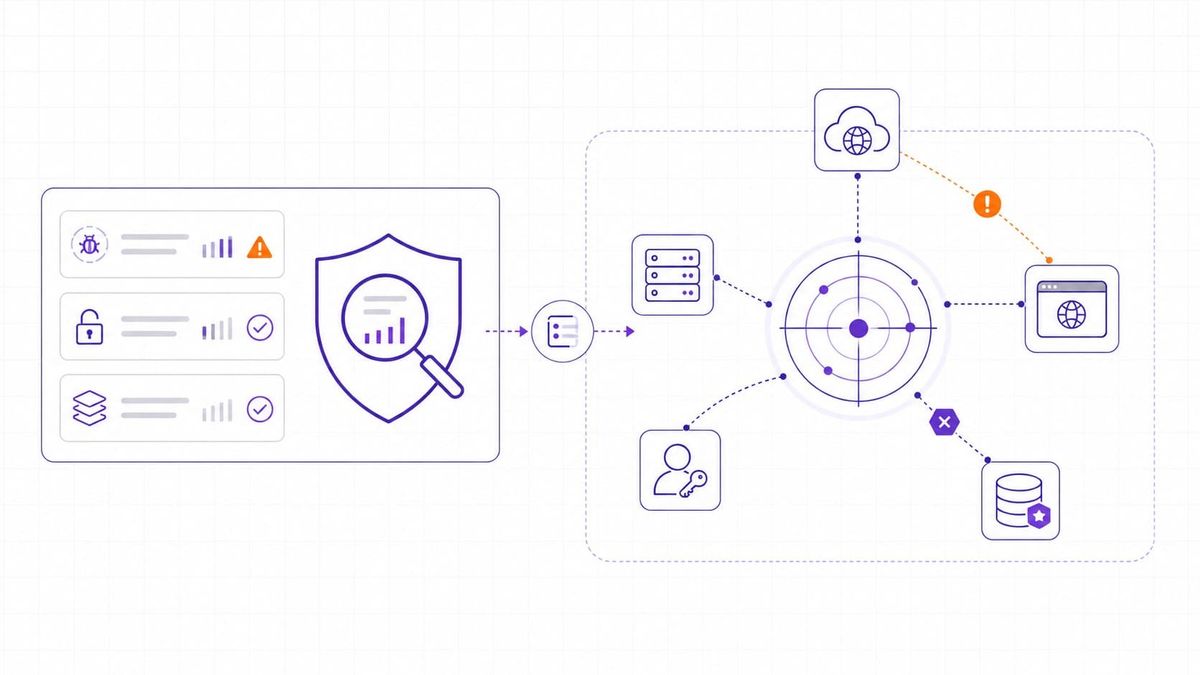
The practical answer is not ASM or VM. It is ASM feeding VM with better asset visibility, and VM turning that visibility into tracked remediation.
Attack Surface Management Maps External Exposure
Attack surface management is the continuous discovery, classification, and monitoring of internet-facing assets. It looks from the outside in, similar to the way an attacker, scanner, or researcher might first encounter the organization.
ASM commonly covers:
- domains and subdomains;
- IP ranges and hosts;
- open ports and exposed services;
- web applications and APIs;
- cloud endpoints;
- certificates and TLS configuration;
- third-party or forgotten assets connected to the organization.
Microsoft's Defender External Attack Surface Management documentation describes this outside-in view as a way to discover and map online infrastructure, including unknown and unmonitored properties.
ASM is especially useful when the asset list is incomplete. That is common in growing teams: developers create staging environments, DevOps teams add cloud resources, vendors connect systems, and old services survive longer than expected. ASM helps turn that external sprawl into a visible inventory.
ASM Reduces Risk Through Visibility
ASM reduces risk by shortening the time between exposure and action. The exposure may be a forgotten host, an unexpected open port, a public admin panel, an expired certificate, or a service that should not be internet-facing.
The key output is not just a list of assets. A good ASM process should show what changed, why it matters, and where remediation should start.
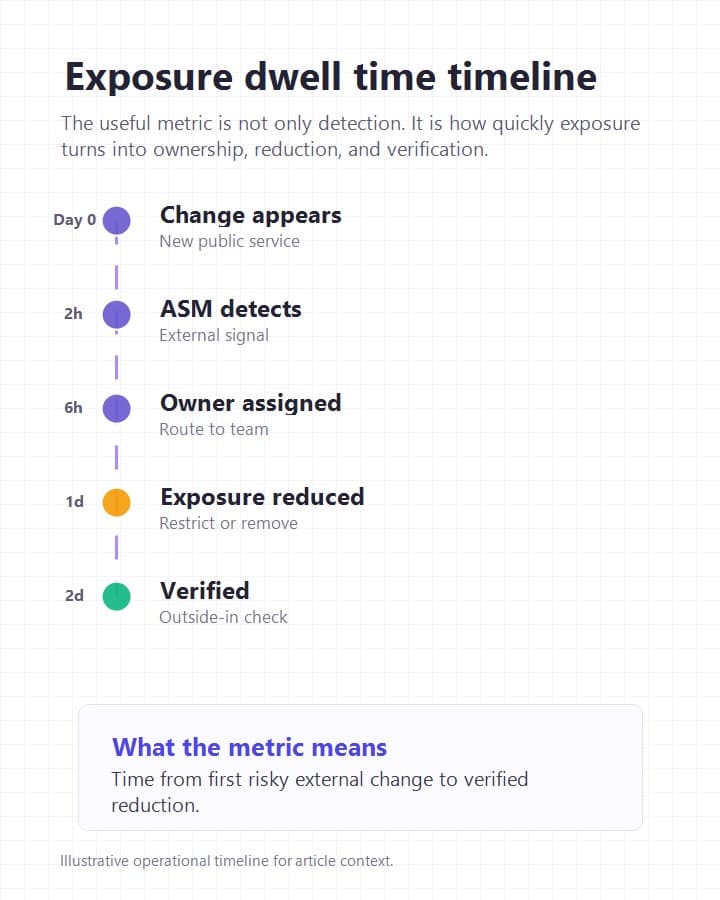
NIST SP 800-137 frame continuous monitoring as a way to maintain visibility into assets, threats, vulnerabilities, and control effectiveness so organizations can respond to risk in time.
Vulnerability Management Turns Findings into Remediation
Vulnerability management is the structured process of identifying, prioritizing, remediating, and verifying weaknesses in systems, applications, packages, and configurations.
VM usually starts with known assets. Teams scan servers, containers, cloud resources, repositories, dependencies, or network ranges and then evaluate the findings. The work does not stop at detection. A useful VM program assigns ownership, sets remediation targets, tracks exceptions, and verifies fixes with rescans.
Common VM activities include:
- asset inventory and scan scoping;
- vulnerability scanning;
- CVE and CVSS review;
- exploitability and business-context analysis;
- patching or configuration changes;
- ticketing and ownership;
- validation through rescanning;
- reporting for technical and leadership audiences.
NIST SP 800-40 Rev. 4 treats patch management as an enterprise process that includes identifying, prioritizing, acquiring, installing, and verifying patches, updates, and upgrades.
Patching is preventive maintenance, not a one-time cleanup. That framing is useful for VM because it keeps remediation tied to ongoing operational discipline rather than occasional emergency work.
ASM and VM Use Different Levers
ASM and VM both reduce cyber risk, but they work through different levers. ASM improves visibility into exposure. VM improves the organization's ability to fix and verify weaknesses.
| Area | Attack Surface Management | Vulnerability Management |
|---|---|---|
| Main question | What can outsiders see or reach? | Which known weaknesses should we fix first? |
| Starting point | External discovery and internet-facing assets. | Known assets, systems, software, and configurations. |
| Typical findings | Unknown subdomains, exposed services, cloud endpoints, risky ports, certificate issues, and public admin surfaces. | CVEs, missing patches, weak configurations, vulnerable packages, and scan findings. |
| Primary value | Finds assets and exposures that may be missing from the inventory. | Converts weaknesses into prioritized remediation work. |
| Best metric | Unknown assets found, exposure dwell time, and risky internet-facing services. | MTTR, critical findings fixed within SLA, and validation pass rate. |
| Main failure mode | Treating discovery as a one-time inventory. | Treating scan output as a fix plan without ownership or context. |
In practice, ASM should feed VM. When ASM discovers a new external service, that asset should enter the vulnerability workflow. When VM identifies a critical weakness on an internet-facing asset, ASM context should raise its priority.
Data Inputs and Visibility Are Not the Same
The biggest difference between ASM and VM is not the tool category. It is the visibility model.
ASM uses external signals. It may discover assets through DNS records, certificate data, IP ownership, web crawling, exposed services, cloud metadata, or relationships between known and newly discovered infrastructure. The result is a dynamic view of what appears to belong to the organization from the public internet.
VM uses known scope. It usually depends on an asset inventory, agent coverage, authenticated scanning, network ranges, repository access, package manifests, or cloud integrations. The result is often deeper technical detail for assets already under management, which is why a vulnerability assessment is most useful when the scope is accurate.
Neither view is complete alone. ASM can tell you a forgotten API exists, but it may not know every package running inside it. VM can identify vulnerable packages, but only if the system is in scope. The stronger program connects both views.
A Simple Example
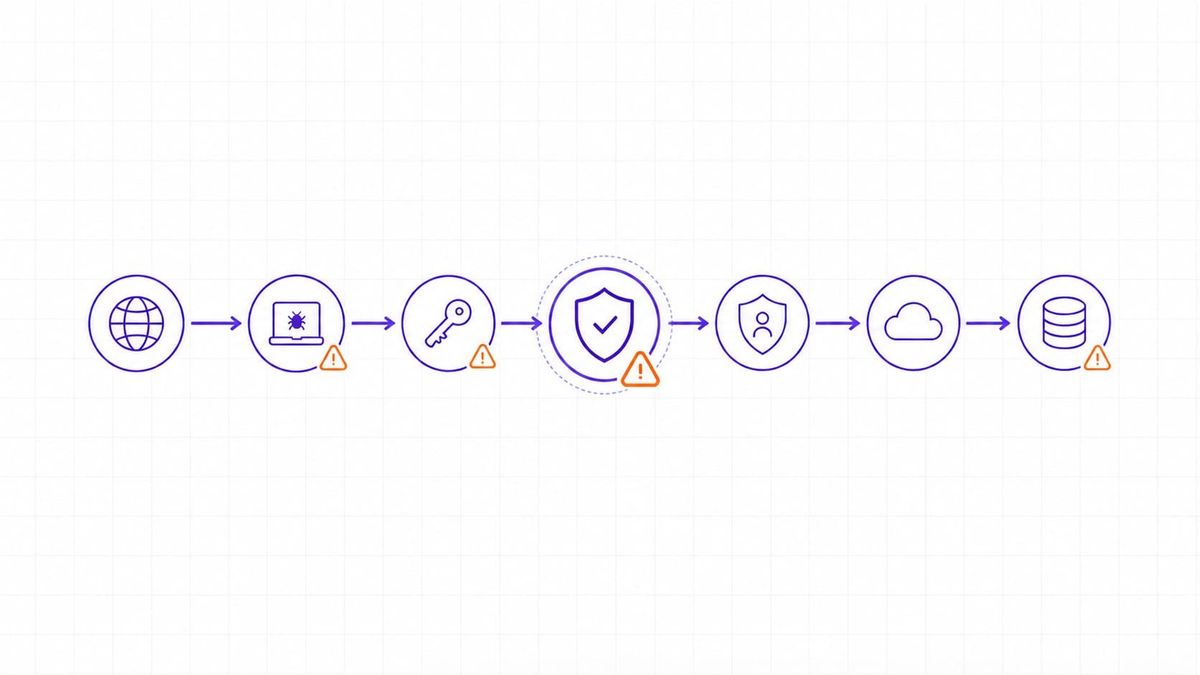
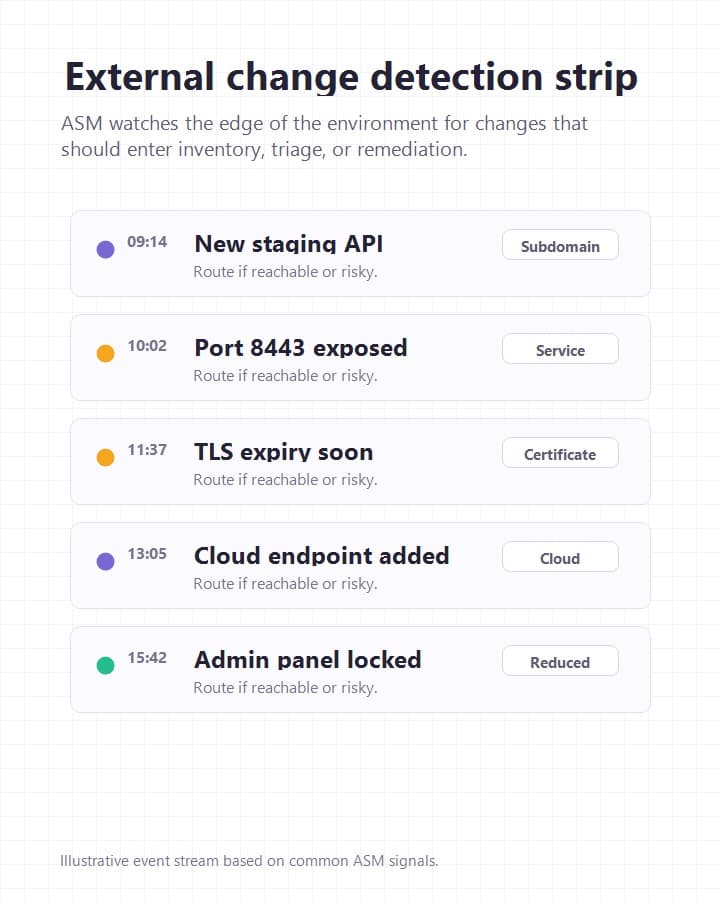
Suppose a developer creates `staging-api.example.com` for a partner test and forgets to remove it. ASM may detect the new subdomain, exposed service, TLS state, and technology signals. VM can then scan the host, identify known vulnerabilities or configuration problems, create tickets, and verify the fix after the endpoint is removed or secured.
Without ASM, the asset may stay invisible. Without VM, the team may see the exposure but never close the loop.
Core Workflows Look Similar but Serve Different Jobs
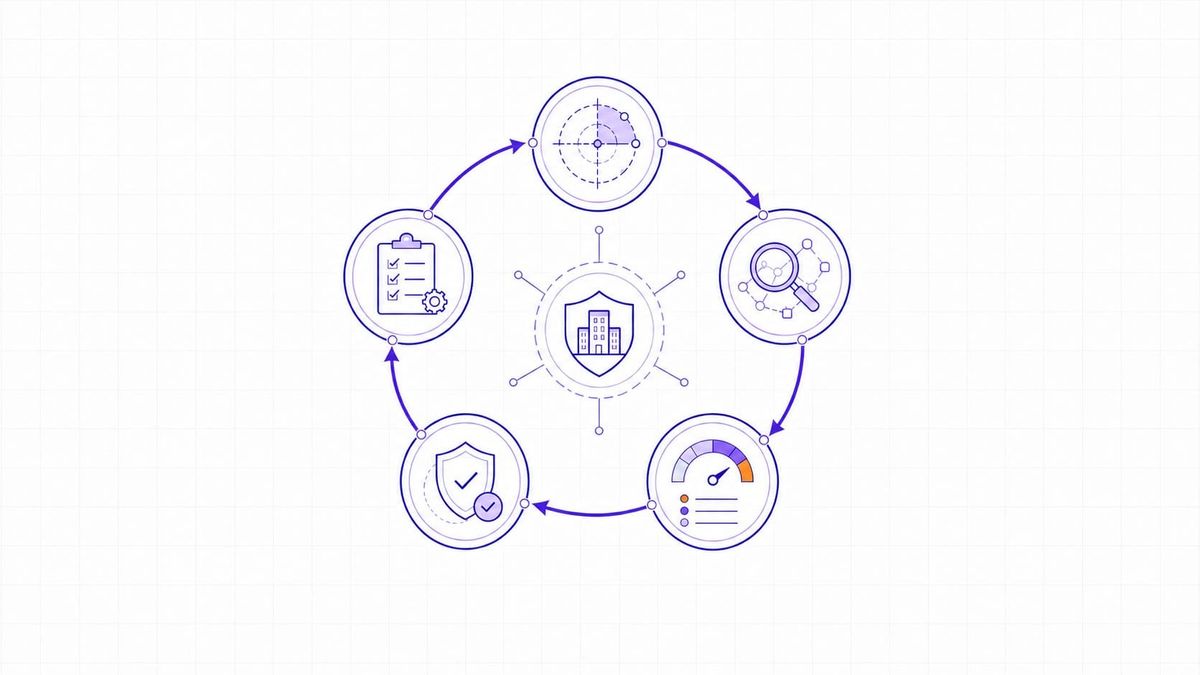
ASM and VM both have cycles, but each cycle is optimized for a different job.
| Workflow stage | ASM focus | VM focus |
|---|---|---|
| Discover | Find internet-facing assets, including unknown or unmanaged ones. | Maintain the asset and software scope for scanning. |
| Assess | Identify exposure, reachability, service risk, and external context. | Identify vulnerabilities, severity, exploitability, and affected versions. |
| Prioritize | Focus on assets attackers can reach and changes that increase exposure. | Focus on risk, exploitability, business impact, and remediation SLA. |
| Remediate | Remove or reduce exposure, close ports, fix misconfigurations, and retire stale assets. | Patch, upgrade, reconfigure, compensate, or accept risk with documented rationale. |
| Verify | Confirm the exposure is gone or reduced from the outside. | Rescan or otherwise validate that the vulnerability is fixed. |
| Monitor | Watch for new assets and exposure changes. | Track recurrence, SLA performance, exceptions, and risk reduction. |
This is why ASM belongs close to asset management and exposure management, while VM belongs close to remediation operations. They overlap, but they should not be treated as interchangeable labels.
Attack Surface Reduction and Enterprise Vulnerability Management
Attack surface reduction (ASR) and enterprise vulnerability management (EVM) are related terms that often appear in the same conversation.
ASR is the action side of ASM. If ASM finds exposed services, ASR reduces the number or reachability of those services. Examples include removing an unused public endpoint, disabling an unnecessary protocol, restricting access to an admin interface, or retiring a stale environment.
EVM is vulnerability management at organizational scale. It formalizes scanning, prioritization, ownership, SLAs, exception handling, and reporting across many teams and assets. EVM is less about running one scan and more about operating a repeatable remediation system.
Used together, ASR and EVM support defense in depth. ASR reduces what attackers can touch. EVM reduces the weaknesses that remain inside the approved and necessary environment.
CVSS Helps, but It Is Not the Whole Risk Model
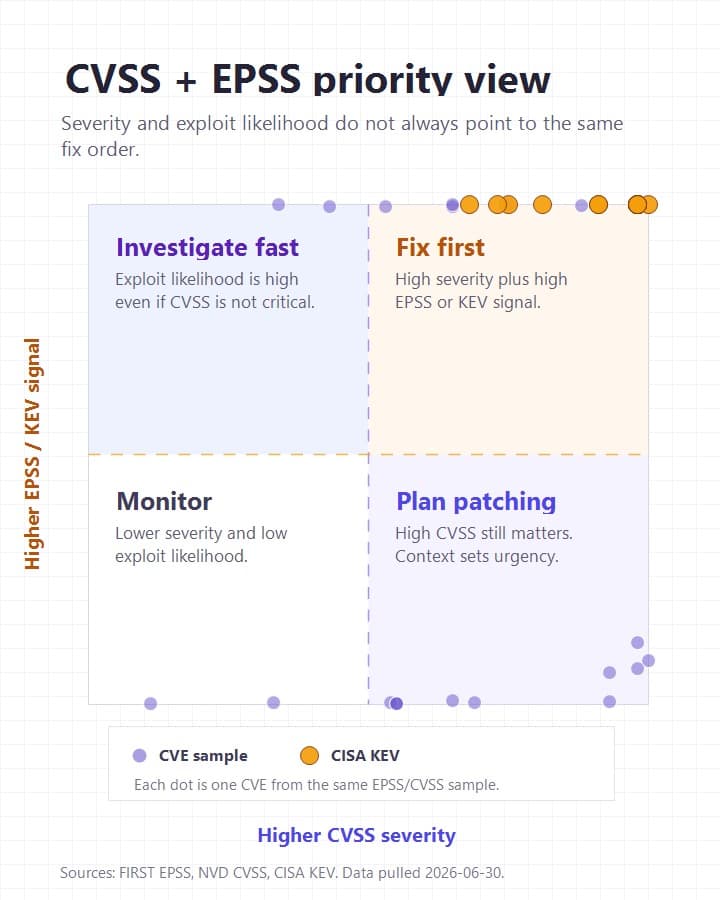
CVSS is useful because it gives teams a common language for technical severity. But a CVSS score should not be the only input for prioritization.
FIRST's CVSS v4.0 specification explains that CVSS includes Base, Threat, Environmental, and Supplemental metric groups. It also notes that organizations should consider factors outside CVSS when ranking threats and making remediation decisions.
The FIRST CVSS Special Interest Group positions CVSS as a standardized severity framework, while also making room for threat intelligence and environmental context. For VM teams, that means the base score is a starting point, not a final decision.
For example, a medium-severity vulnerability on an internet-facing authentication service may deserve faster action than a high-severity vulnerability on an isolated internal test system. ASM context helps identify that external exposure. VM context helps identify the affected software, owner, and fix path.
Metrics That Matter
Good metrics show whether the program is reducing exposure, not just producing more findings.
For ASM, useful metrics include:
- number of unknown internet-facing assets discovered;
- exposure dwell time;
- new external services detected per week or month;
- risky open ports on public assets;
- percentage of discovered assets assigned to an owner;
- number of stale or unauthorized assets removed.
For VM, useful metrics include:
- mean time to remediate critical findings;
- percentage of critical vulnerabilities fixed within SLA;
- validation pass rate after remediation;
- number of overdue findings by owner;
- recurrence rate for the same vulnerability or misconfiguration;
- risk burn-down over time.
The shared metric is simple: are the most reachable and most damaging issues being fixed faster?
Tooling and Integrations Should Support the Workflow
Tools matter, but the workflow matters more. A scanner that produces a long list of issues is not the same thing as a management process.
For ASM and VM to work together, the toolchain should support:
- external asset discovery and network vulnerability assessment;
- scanning for exposed services and known vulnerabilities;
- deduplication of repeated findings;
- context-aware prioritization;
- ownership and ticket routing;
- SLA tracking;
- rescanning and verification;
- reporting that a CTO, DevOps lead, or customer security reviewer can understand.
TopScan fits this combined workflow for teams without a full in-house security function. It helps monitor external infrastructure, discover services, subdomains, IPs, cloud endpoints, and exposed assets, and connect findings to vulnerability management actions. In project materials, TopScan is described around external infrastructure scanning, attack surface discovery, dependency checks, prioritization, status tracking, SLA workflows, and integrations such as AWS, CI/CD, GitHub, GitLab, Jira, Slack, Teams, and webhooks.
When to Use ASM, VM, or Both
Most teams need both, but the starting point depends on the pain.
Start with ASM when you are unsure what is exposed to the internet. This is common after cloud migration, fast product growth, acquisitions, vendor onboarding, or years of ad hoc infrastructure changes.
Start with VM when you already have a reasonably accurate asset scope but need a better way to prioritize, assign, fix, and verify vulnerabilities.
Use both when you run customer-facing software, manage multiple environments, or need evidence for security reviews. ASM keeps the scope honest. VM keeps remediation moving.
The combination is especially useful for small security teams and DevOps-led organizations. One technical owner can see what changed externally, understand which weaknesses matter most, and track whether fixes actually happened.
Common Pitfalls
The most common ASM mistake is treating it as a one-time discovery project. Attack surfaces change constantly. A useful ASM program needs continuous monitoring and change review.
The most common VM mistake is treating the scan report as the remediation plan. A scan tells you what might be wrong. A VM process decides who owns the issue, whether the finding is exploitable in context, when it must be fixed, and how the fix will be verified.
Other pitfalls include:
- prioritizing only by CVSS base score;
- leaving shadow IT outside the remediation workflow;
- tracking tickets without validating fixes;
- allowing exception lists to become permanent;
- reporting raw finding counts instead of risk reduction;
- separating external exposure data from vulnerability triage.
The better pattern is simple: discover continuously, prioritize with context, assign ownership, fix what matters, verify the result, and keep monitoring.