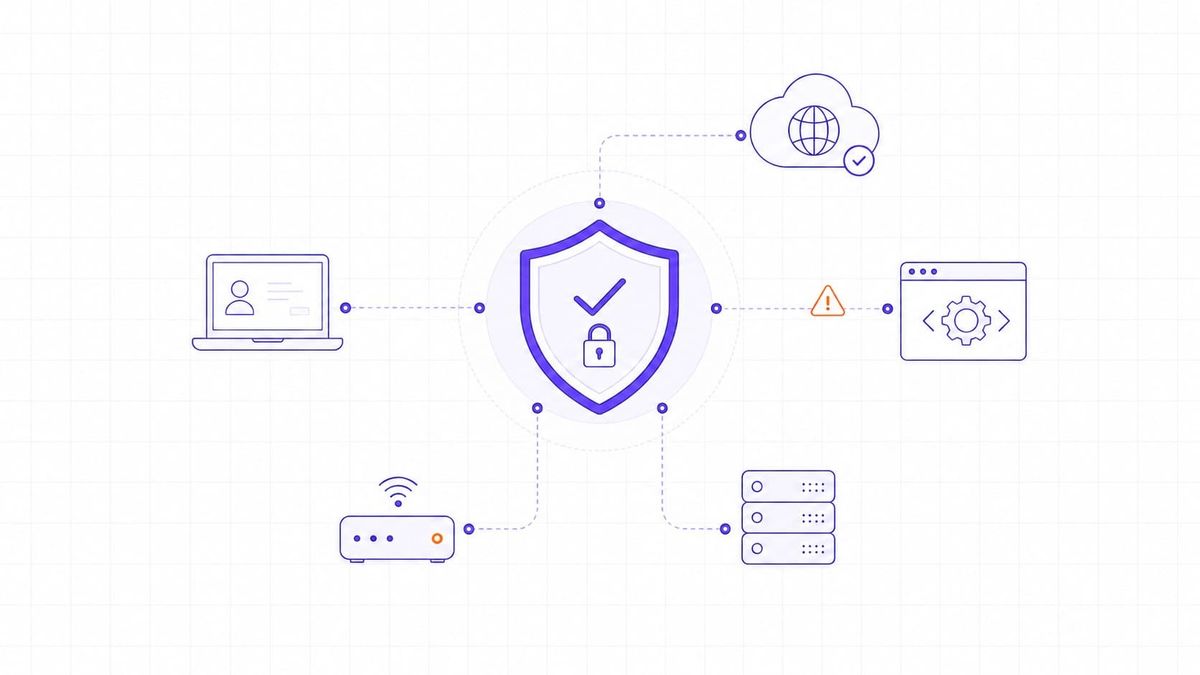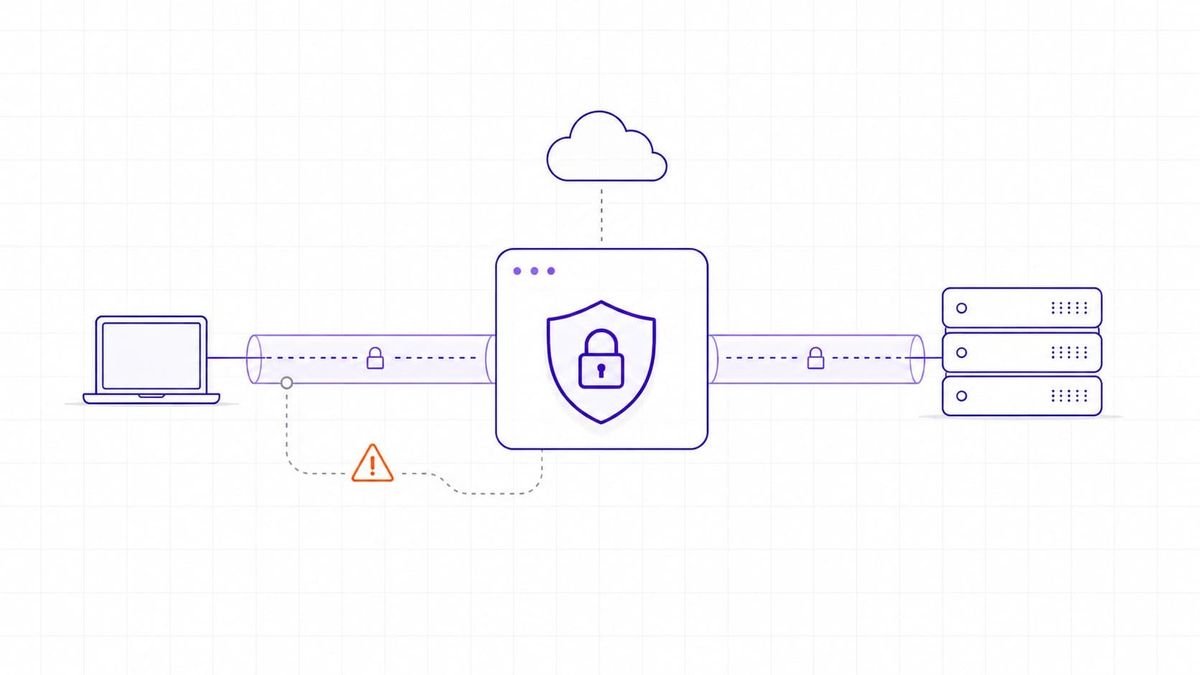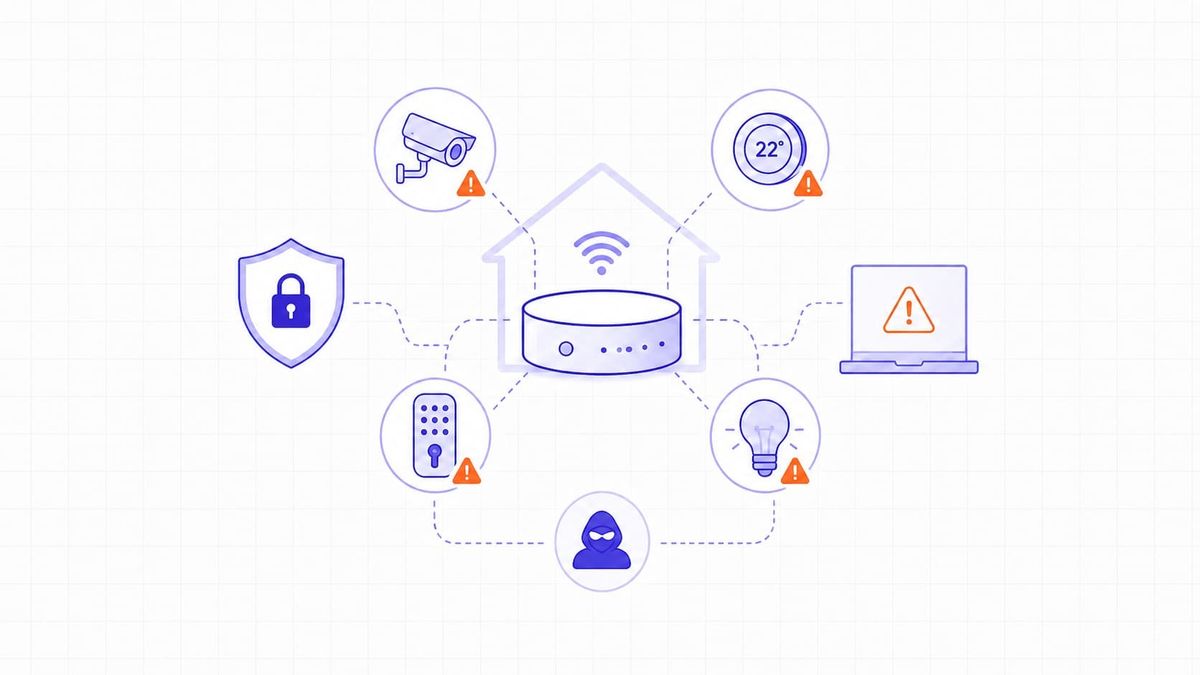

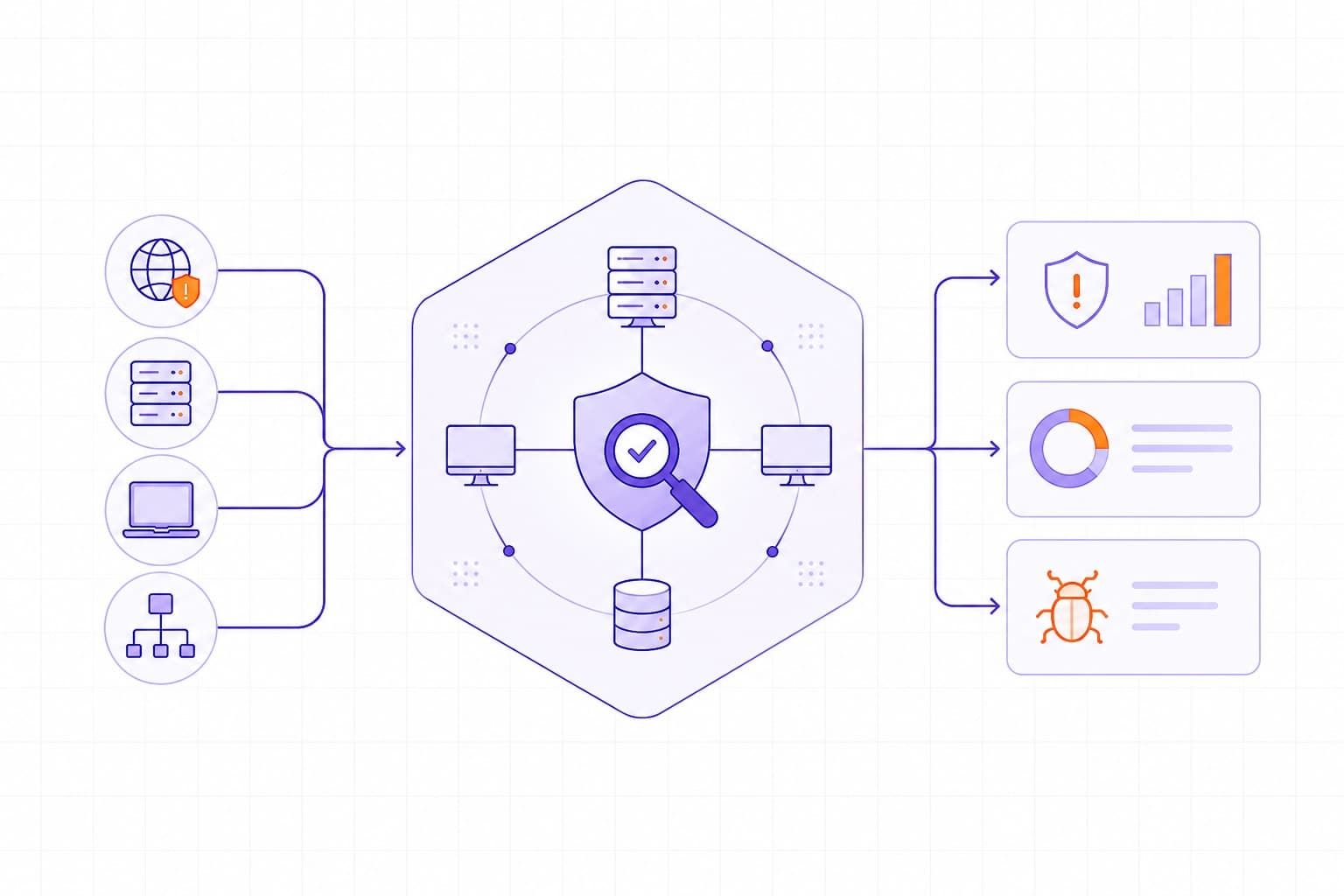
A network vulnerability assessment is a structured process used to identify security weaknesses in an organization’s network, systems, and connected services. In practice, it helps answer four operational questions: what is exposed, what is misconfigured, what can be exploited, and what should be fixed first.
A useful assessment is more than a scan. It connects asset visibility, validation, prioritization, remediation ownership, and proof that the weakness was actually reduced.
Its purpose is to find exploitable weaknesses and help the organization fix them before they lead to a security incident.
This process is a core part of practical cybersecurity. It helps organizations review internal and external exposure, identify misconfigurations, assess outdated services, and reduce the likelihood of compromise. A vulnerability assessment is different from a general network assessment, which may focus on performance, availability, or architecture. It is also different from penetration testing.
A vulnerability assessment identifies and prioritizes weaknesses, while penetration testing attempts to safely exploit them to understand real-world impact. NIST SP 800-115 treats vulnerability scanning and penetration testing as different technical security testing methods, which is why they should be used for different questions.
For a detailed comparison of both approaches, see: Vulnerability Assessment vs Penetration Testing
Table 1. Network vulnerability assessment vs penetration testing
| Aspect | Network vulnerability assessment | Penetration testing |
|---|---|---|
| Primary goal | Find, validate, and prioritize weaknesses. | Validate exploitability and business impact. |
| Coverage | Broader, across many systems, services, and segments. | Narrower, focused on selected targets or scenarios. |
| Method | Scanning, configuration review, manual validation, and prioritization. | Manual testing, exploitation, chaining weaknesses, and attack-path analysis. |
| Output | Prioritized findings and remediation plan. | Proof of exploitability, attack paths, and impact evidence. |
| Best use case | Routine risk reduction and visibility. | High-value target validation and realistic attack simulation. |
Assessment Types and When to Use Them
Network vulnerability assessments usually include several common assessment types, each focused on a different area of risk.
Internal Network Assessment
An internal assessment reviews systems and services from inside the organization’s environment. It is used to identify weaknesses that could be abused by insiders, malware, or attackers who have already gained a foothold in the network.
This type of assessment helps uncover issues such as missing patches, weak credentials, outdated systems, and poor internal segmentation. It is especially useful for reducing the risk of lateral movement and privilege escalation.
Internal weaknesses often become dangerous after the first compromise. Missing patches and weak segmentation may not look urgent in isolation, but they can give an attacker the path needed to move across the environment.
External Assessment
An external assessment focuses on internet-facing systems and services. It looks at the parts of the environment that attackers can reach from outside, such as public web applications, VPN gateways, exposed ports, firewalls, and remote access services.
Its main goal is to identify weaknesses that could allow unauthorized access from the internet and reduce external exposure.
A practical example is the 2023 exploitation of Citrix NetScaler ADC and Gateway CVE-2023-3519. CISA reported that threat actors exploited the vulnerability as a zero-day, implanted a web shell, collected Active Directory data, and attempted lateral movement toward a domain controller. Network segmentation controls blocked that movement. This case shows why a network vulnerability assessment should look not only at exposed perimeter devices, but also at internal paths that could limit or amplify impact.
Network Configuration Review
A network configuration review focuses on technical settings across the environment. This includes firewall rules, routing settings, service exposure, access controls, and device configuration.
The goal is to find weak or inconsistent settings that may create unnecessary risk even if the software itself is fully patched.
Permission Assessment
A permission assessment reviews who or what has access to systems, services, shared resources, and administrative functions inside the environment. This includes users, service accounts, applications, scripts, and integrations.
This is important because security problems are not always caused by software flaws. In many environments, risk increases simply because too many users, services, or systems have more access than they actually need.
Table 2. Choosing the right assessment type
| Main concern | Start with | What it helps uncover | What to add next |
|---|---|---|---|
| Internet-facing exposure | External assessment | Exposed services, VPN gateways, public ports, weak perimeter settings. | Add internal assessment to understand post-compromise risk. |
| Lateral movement risk | Internal assessment | Weak segmentation, missing patches, exposed internal services. | Add permission review and segmentation analysis. |
| Configuration drift | Network configuration review | Firewall rule gaps, routing issues, inconsistent access controls. | Add recurring scans and change-triggered reviews. |
| Excessive access | Permission assessment | Overprivileged users, service accounts, and internal access paths. | Add regular access reviews and least-privilege cleanup. |
| Legacy systems | Internal assessment | Unsupported software, patch gaps, fragile hosts, old protocols. | Add compensating controls and replacement planning. |
Step-by-Step Methodology of a Network Vulnerability Assessment
A network vulnerability assessment should follow a clear process, not rely on a one-time scan with no context.
The first step is to define the scope. The organization needs to decide which systems, services, and network segments will be assessed. After that, the team builds an inventory of relevant assets, including devices, servers, applications, databases, and exposed services.
The next step is network mapping, which shows how systems, services, and assets are connected. Once the environment is understood, scanners and manual review techniques can be used to identify weaknesses. The findings are then analyzed, validated, and prioritized based on severity, exploitability, exposure, and business impact.
For more detail on scan types, ports, services, and cadence, see: What Is Network Vulnerability Scanning?
A practical assessment methodology usually includes:
- defining the scope of the assessment;
- inventorying important assets and services;
- mapping the network and key dependencies;
- identifying vulnerabilities and weak settings;
- validating and analyzing the findings;
- prioritizing issues by likely impact and exploitability;
- creating a remediation plan;
- rescanning after fixes are applied.
This process helps organizations move from raw findings to practical action.
Table 3. Network vulnerability assessment workflow
| Step | What happens | Common mistake | Useful output |
|---|---|---|---|
| Scope definition | Define systems, segments, services, and boundaries. | Scope is too vague or excludes important assets. | Approved target list. |
| Asset inventory | Identify devices, servers, services, applications, and databases. | Shadow assets or unmanaged systems are missed. | Current asset inventory. |
| Network mapping | Map connectivity, dependencies, and critical paths. | Teams assume topology is already known. | Network and dependency map. |
| Scanning and review | Identify weaknesses with scanners and manual checks. | Raw scan output is treated as final. | Validated findings. |
| Risk prioritization | Rank issues by severity, exposure, exploitability, and impact. | Findings are sorted only by CVSS. | Practical remediation queue. |
| Remediation planning | Assign owners, fixes, timelines, and controls. | No owner or deadline is defined. | Action plan. |
| Rescan | Verify that fixes worked. | Tickets are closed without validation. | Proof of remediation. |
Risk Prioritization in a Network Vulnerability Assessment
Not every vulnerability should be treated the same way. Some weaknesses are easy to exploit because they affect critical or exposed systems. Others may exist in low-value or isolated assets and therefore require a different response.
That is why discovered vulnerabilities are usually triaged rather than fixed all at once. Teams typically address the issues with the highest likelihood of exploitation and the greatest business impact first. CVSS can help describe technical severity, but it should not be used as the only prioritization signal. FIRST states that CVSS measures severity and should not be used alone to assess risk.
Severity is only one part of the decision. A finding becomes more urgent when it affects an exposed asset, has known exploitation activity, supports a critical business process, or has no clear compensating control.
In practice, teams should also check whether the asset is exposed, whether exploitation is known in the wild through CISA KEV, and whether EPSS suggests a higher near-term exploitation probability. CISA says organizations should use the KEV Catalog as an input to vulnerability management prioritization, while FIRST describes EPSS as a model that estimates the probability that a published CVE will be exploited in the wild in the next 30 days.
The 2017 Equifax breach is another example of why known vulnerabilities on public-facing systems need fast assessment and remediation. Equifax said the attack vector was Apache Struts CVE-2017-5638 in its online dispute portal web application. For network assessment teams, the lesson is simple: known vulnerabilities on exposed, business-critical services should not remain in the backlog without ownership and verification.
Table 4. What to check before prioritizing a finding
| Factor | Why it matters | Example question |
|---|---|---|
| Severity | Shows technical seriousness. | What is the CVSS score and vector? |
| Exposure | Exposed systems usually need faster action. | Is the asset internet-facing or broadly reachable? |
| Exploitability | Known exploitation changes urgency. | Is the vulnerability listed in KEV? |
| Near-term likelihood | Helps compare many CVEs. | What does EPSS suggest about exploitation probability? |
| Business impact | The same flaw can matter differently on different systems. | What breaks if this system is compromised? |
| Compensating controls | Existing protections may reduce immediate urgency. | Is access restricted, segmented, monitored, or protected? |
| Ownership | No owner usually means slow remediation. | Who can actually fix this issue? |
Remediation Planning
After analysis and prioritization, the next step is remediation planning. At this stage, the team decides how each issue should be handled, who owns it, and what should happen first.
In many cases, remediation includes patching outdated software, correcting insecure settings, disabling unnecessary services, tightening permissions, or updating firewall rules. If a permanent fix cannot be applied immediately, temporary compensating controls may be used until the full remediation is completed.
A good remediation plan does not just list technical tasks. It assigns ownership, sets priority, defines an expected timeline, identifies temporary compensating controls when needed, and explains how the fix will be verified. Without this, the assessment becomes a report rather than a risk-reduction process.
The real test of an assessment is whether findings turn into completed fixes. Every high-priority issue should have an owner, a deadline, a temporary risk-reduction option when needed, and a verification step after remediation.
Network Mapping in Vulnerability Assessment
Network mapping creates a practical view of the organization’s environment. It shows how systems communicate, which applications depend on which services, and where critical paths exist between assets.
This is valuable because vulnerability analysis becomes much more useful when it is based on real connectivity rather than assumptions. A mapped network helps teams understand which assets are sensitive, which paths are exposed, and where segmentation or configuration problems may exist.
For organizations with large or changing environments, network mapping is not just a convenience. It is a necessary part of understanding where risk actually lives.
Common Security Risks in Network Environments
A network vulnerability assessment often uncovers recurring weaknesses that appear across many environments.
One common problem is unnecessary open ports or exposed services. These increase the attack surface and give attackers more entry points to test. Outdated services are another frequent issue, especially when unsupported software remains active in production.
Another useful example is the exploitation of Microsoft Exchange ProxyShell vulnerabilities. A joint cybersecurity advisory reported that Iranian government-sponsored and IRGC-affiliated actors used CVE-2021-34473, often together with CVE-2021-34523 and CVE-2021-31207, to gain access to targeted networks. For a network vulnerability assessment, this is a clear reminder that exposed infrastructure such as mail servers, VPN gateways, and remote access services should be reviewed quickly when high-impact vulnerabilities are disclosed.
Weak or default passwords remain a major risk as well. In many environments, they make brute-force attacks or unauthorized access far easier than they should be. Poor segmentation is another serious problem. In a flat network, an attacker who compromises one system may be able to move laterally through the environment with little resistance.
Legacy protocols also create risk because they often lack modern protections and may expose sensitive traffic to interception or misuse.
What a Network Vulnerability Assessment Report Should Include
The final report should do more than list raw findings. It should help the organization understand what was assessed, what was found, how serious the issues are, and what needs to happen next.
A raw scanner export is not an assessment report. A useful report should remove obvious noise, group related findings, explain business relevance, assign practical priority, and show what should happen next.
A strong assessment report usually includes:
- the scope of the assessment;
- the systems, services, and segments reviewed;
- the vulnerabilities and weak configurations identified;
- the likely impact of those findings;
- prioritization guidance;
- clear remediation recommendations;
- next steps for validation and rescanning.
A well-structured report is useful for technical teams, security managers, and leadership. It supports planning, resource allocation, and decisions about how to reduce risk most effectively.
Table 5. What a useful network vulnerability assessment report should contain
| Section | What it should include | Why it matters |
|---|---|---|
| Scope and dates | What was assessed, when, and what was excluded. | Avoids false confidence about systems that were not reviewed. |
| Asset summary | Systems, services, segments, and critical assets. | Shows coverage and helps readers understand context. |
| Confirmed findings | Validated vulnerabilities and weak configurations. | Separates signal from scanner noise. |
| Risk prioritization | Severity, exposure, exploitability, and impact. | Helps teams act in the right order. |
| Ownership and remediation | Who fixes what and how. | Prevents findings from stalling. |
| Compensating controls | Temporary protections or risk reducers. | Supports realistic planning when fixes take time. |
| Rescan plan | How and when fixes will be verified. | Proves that remediation actually worked. |
Safe Practices Before Running the Assessment
A network vulnerability assessment should always be performed in a controlled and safe way. The goal is to identify weaknesses without disrupting normal operations.
Whenever possible, assessments should be scheduled during approved maintenance windows or lower-traffic periods. Teams should also choose scan settings carefully, especially in environments with fragile or legacy systems. NIST SP 800-115 notes that port scanning can disrupt network operations by consuming bandwidth and slowing response times, which is why scan profiles and timing matter.
After remediation, teams still need verification. Fixes should be reviewed and followed by rescanning to confirm that the weakness is no longer present and that no new issue was introduced during the change.
Before running a broad network vulnerability assessment, teams should confirm several operational details:
- Approved scope - make sure all target systems, IP ranges, services, and environments are approved for testing.
- Maintenance window - schedule heavier scans during lower-traffic periods to reduce the risk of business disruption.
- Fragile systems list - identify legacy, unstable, or sensitive systems that may need lighter scan settings.
- Credential handling - protect credentials used for authenticated scanning and limit them to the required scope.
- Rate limits - adjust scan speed and intensity to avoid unnecessary network load.
- Emergency contacts - define who should be contacted if scanning causes unexpected issues.
- Rescan plan - decide how and when fixed issues will be checked again after remediation.