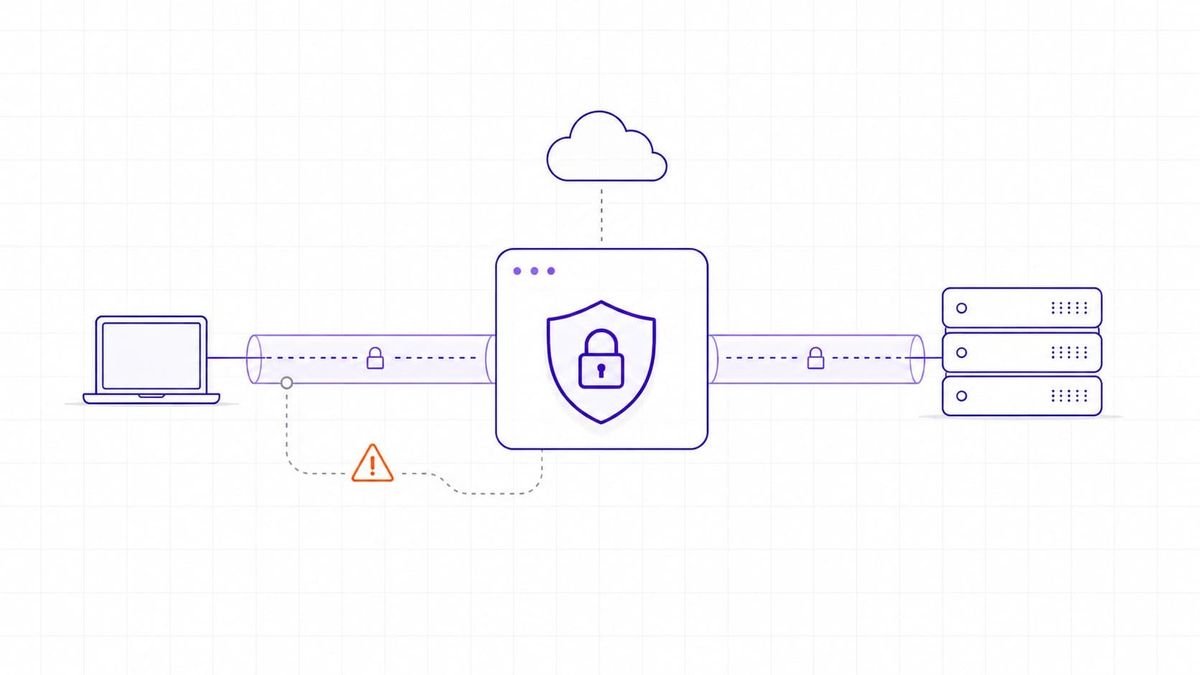

Modern organizations no longer operate behind one neat, central perimeter. Employees connect from home and branch offices, applications run across cloud services, and APIs, devices, and workloads exchange data over the internet. Each connection can create both business value and a potential entry point.
Edge security is the discipline of protecting those connections at or close to the network edge: the places where an organization meets the internet, cloud platforms, SaaS services, remote users, partner networks, and connected devices. It supplements, not replaces, controls in data centers, endpoints, and cloud workloads.
Edge security protects distributed points of connection
The exact edge differs by organization. For one team, it may include a branch router, remote-access gateway, and public web application. For another, it also includes APIs, CDN configurations, IoT devices, cloud gateways, and identities that access SaaS platforms.
The practical goal is consistent, context - aware protection. Instead of assuming that traffic is safe once it is "inside," security teams evaluate the user, device, application, request, and destination. Controls can then be applied near the connection while security events remain visible to the team.
NIST SP 800-207 explains that Zero Trust removes implicit trust based solely on network location. Its guidance supports explicit verification and least-privilege access based on the specific request.
The edge environment includes more than a perimeter firewall
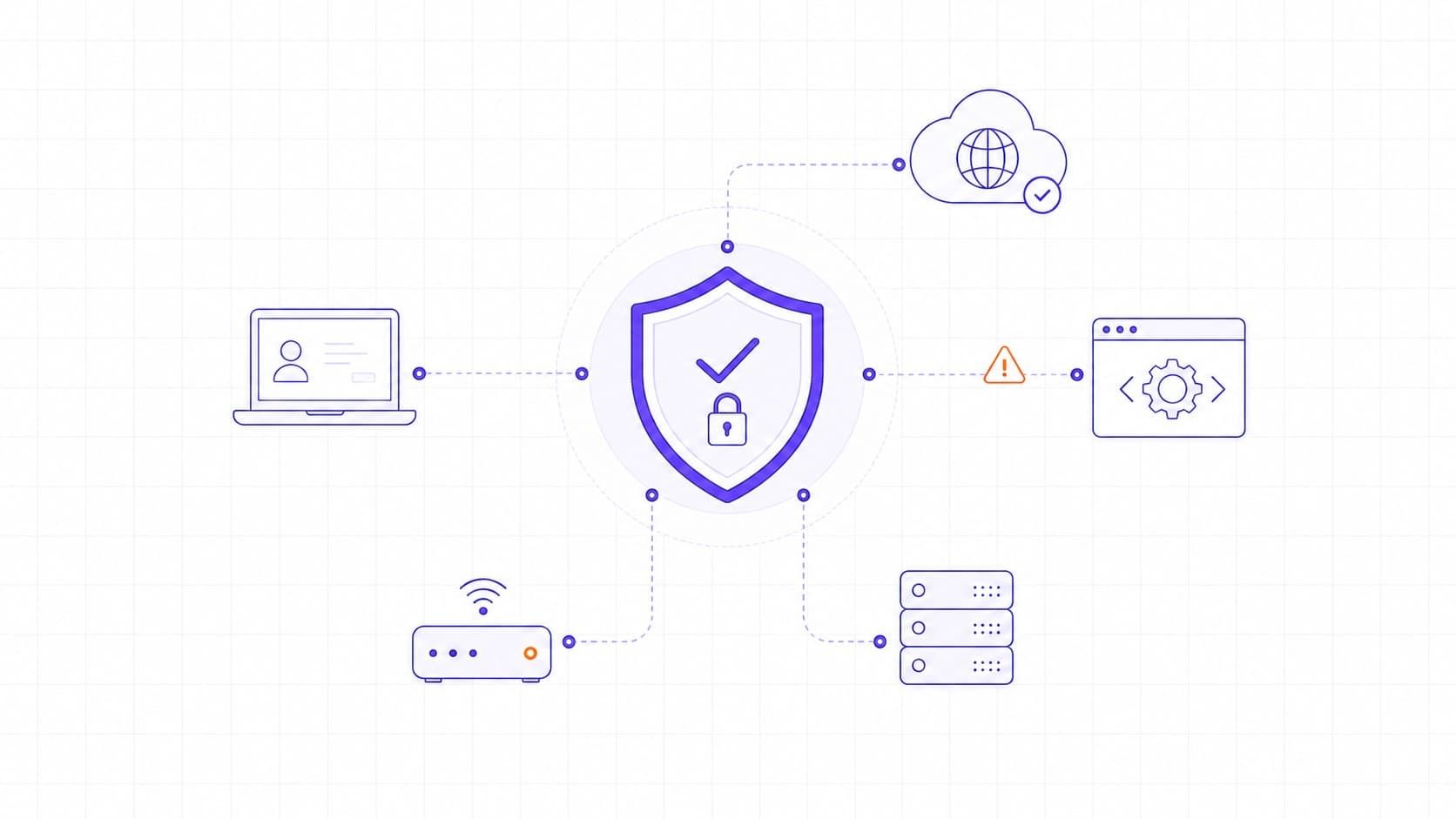
An edge environment commonly includes:
- Remote workers and managed or unmanaged laptops and mobile devices.
- Branch offices, retail sites, and remote operational locations.
- Internet-facing web applications, APIs, domains, and CDN endpoints.
- Cloud gateways and SaaS access paths.
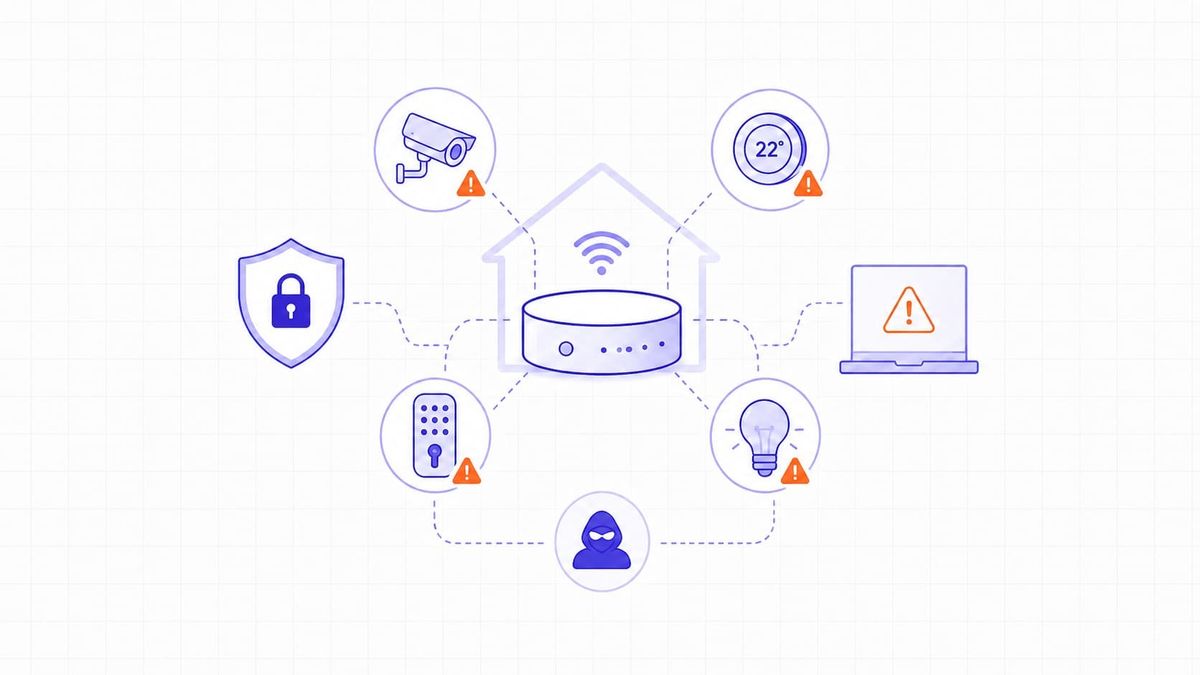
- IoT, cameras, sensors, and industrial devices.
- VPN, ZTNA, and third - party access gateways.
These assets are often owned by different teams and change frequently. That is why an accurate inventory of internet-facing assets is foundational. A network vulnerability assessment can help validate which services are exposed, which software is outdated, and where remediation should begin.
Edge risks combine technical exposure and excessive trust
Most edge incidents do not have a single cause. A stolen password becomes more dangerous when a user receives broad internal access. A vulnerable web gateway is more damaging when the organization cannot quickly identify its version and exposure. A cloud misconfiguration becomes an incident when data is publicly reachable or access logs are missing.
Common risk patterns include credential phishing and reuse, vulnerable or misconfigured edge devices, exposed administration interfaces, weak API authorization, malware on a connecting endpoint, DDoS activity, and unmanaged third-party access. Encryption protects data in transit, but it does not remove the need for strong identity checks, safe endpoint posture, secure configuration, and careful key management.
Wayne Jansen and Timothy Grance note in NIST SP 800-144 that cryptographic protection depends on controlling keys and key-management components. In edge programs, that means protected private keys, defined ownership, rotation, revocation, and monitoring, not merely turning encryption on.
Core edge security controls work as a system
No single product provides edge security by itself. The controls below address different parts of the access path and should be selected according to the organization’s assets, data sensitivity, and operational capacity.
| Control | Primary purpose | Practical implementation question |
|---|---|---|
| Identity and MFA | Verify the user and resist account takeover. | Is phishing-resistant MFA required for privileged and remote access? |
| Device posture | Limit access from risky or unmanaged endpoints. | Can the service evaluate encryption, patch level, EDR status, or device ownership? |
| ZTNA and least privilege | Grant only the application access a user needs. | Does a user receive an application connection rather than broad network access? |
| Secure web gateway | Apply web filtering and inspection policies. | Are risky destinations, downloads, and policy violations logged and controlled? |
| WAF and API protection | Protect public applications and APIs. | Are authentication, authorization, rate limits, and common attack patterns tested? |
| Segmentation | Reduce lateral movement after compromise. | Can an edge-connected identity reach only approved services and ports? |
| Visibility and detection | Find misuse and confirm response actions. | Are identity, endpoint, cloud, API, and network events correlated and retained? |
Firewalls remain useful for enforcing network policy. Secure web gateways can govern web access. ZTNA can provide identity- and context-based application access. CASB capabilities can improve visibility and policy enforcement for cloud services. WAFs and API gateways can add application-layer protection. Their value comes from coordinated policy and monitoring, not from a label on the architecture.
For exposure that begins with publicly reachable services, review open ports and their vulnerabilities alongside web and API controls.
SASE, SSE, and edge computing address different design needs
SASE combines wide-area networking capabilities, commonly SD-WAN, with cloud-delivered security services. SSE focuses on the security side, such as secure web gateways, CASB, and ZTNA. Edge computing refers to processing workloads near where data is generated; it creates additional systems that need identity, patching, workload protection, and monitoring.
| Model | What it combines | When it is commonly useful | Security focus |
|---|---|---|---|
| SASE | Networking and cloud-delivered security. | Teams modernizing branch connectivity and remote access together. | Consistent policies across traffic paths. |
| SSE | Cloud-delivered security services. | Teams retaining their networking design but improving user-to-app security. | ZTNA, web controls, SaaS visibility, and data protection. |
| Edge computing | Local compute near devices or data sources. | Low-latency or operational workloads. | Hardening distributed nodes and protecting data flows. |
These models can reduce unnecessary backhauling and improve user experience, but performance is not automatic. Teams still need to test routing, availability, policy consistency, logging, and incident-response procedures.
Edge security differs from traditional network security in placement and trust
Traditional perimeter security often assumed that the corporate network was the primary trusted zone. Edge security is designed for environments where users, applications, and data move across many locations and services. It shifts the control point closer to the request and makes identity, device context, and application-level policy more central.
| Area | Traditional centralized approach | Edge security approach |
|---|---|---|
| Inspection point | Data center or corporate perimeter. | Near users, devices, applications, and cloud entry points. |
| Access decision | Often network-based after connection. | Identity-, device-, application-, and context-aware. |
| Traffic path | May backhaul traffic to a central stack. | Can inspect through distributed or cloud-delivered points of presence. |
| Remote access | Often broad VPN connectivity. | Least-privilege access to specific applications or services. |
| Incident containment | Relies heavily on internal network boundaries. | Adds segmentation and continuous verification around each connection. |
The difference is not that one approach is universally obsolete. Many organizations run a hybrid environment while they reduce implicit trust and improve visibility across older and newer systems.
A practical edge security implementation sequence
Start with visibility before making large architecture decisions. Build an inventory of domains, IP addresses, public applications, gateways, APIs, cloud accounts, and externally reachable services. Assign an owner and criticality to each asset.
Next, prioritize high-risk exposure: unsupported software, internet-facing administration services, weak authentication, excessive access, missing patches, and unmonitored cloud or API paths. Continuous attack surface management helps prevent external assets from becoming forgotten exceptions.
Then define access policy around business needs. Require strong authentication, enforce least privilege, check device posture where feasible, and segment sensitive systems. Log access decisions and create tested response steps for compromised accounts, exposed keys, vulnerable gateways, or unusual API behavior.
Finally, measure the program. Track asset coverage, time to patch external vulnerabilities, MFA and privileged-access adoption, stale-account removal, policy exceptions, and detection-to-response time. A broader vulnerability assessment program can connect edge findings with validation, prioritization, remediation, and reporting.
Edge security starts with knowing what attackers can reach
Edge security is a practical response to distributed operations. It brings identity, device, network, application, and data controls closer to the connections where risk appears. The objective is not a perfect perimeter; it is to reduce implicit trust, limit exposure, detect abuse quickly, and contain compromise when it occurs.
For many organizations, the first useful move is to establish a reliable view of externally exposed assets and vulnerabilities. TopScan helps teams discover internet - facing infrastructure, web applications, and APIs, then prioritize remediation using continuous scanning and actionable reporting.