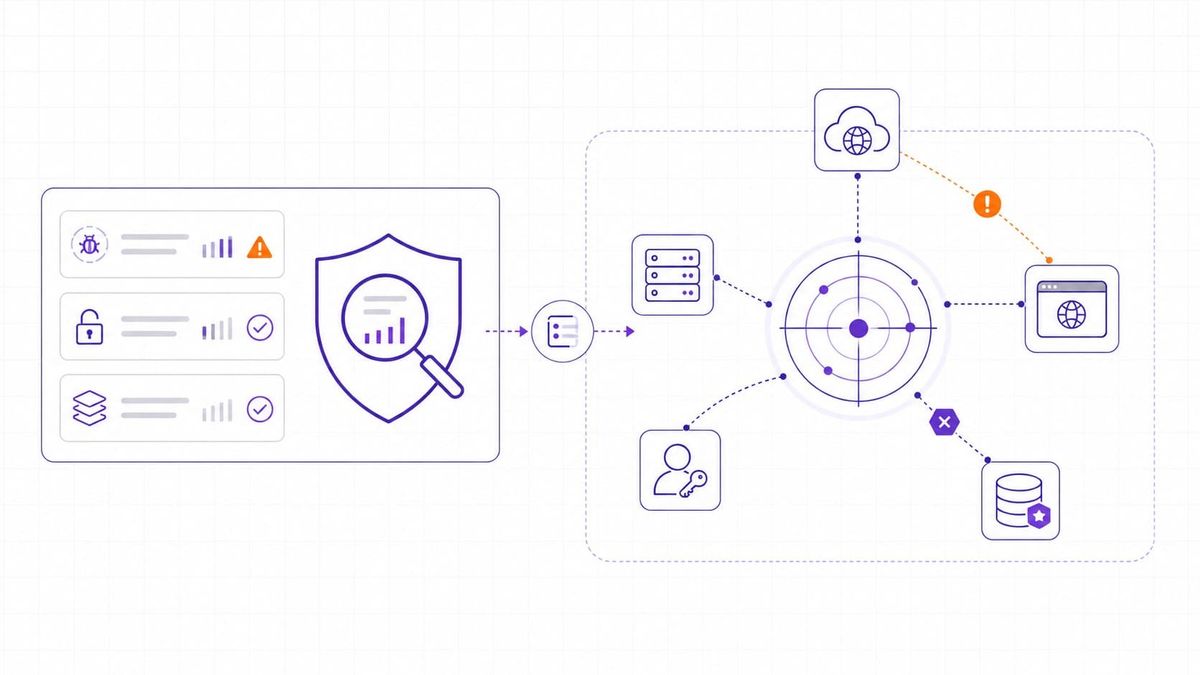

Security teams rarely suffer from a shortage of findings. The harder problem is deciding which exposures could lead to meaningful harm, proving that the risk is real, and getting the right owner to fix it.
Continuous Threat Exposure Management (CTEM) provides an operating model for that work. It connects asset visibility, vulnerability data, threat intelligence, validation, and remediation in a repeating cycle. CTEM does not replace vulnerability scanning, penetration testing, or incident response. It helps an organization use those capabilities together and focus effort on the exposures most likely to affect the business.
Continuous Threat Exposure Management Defined
CTEM is a continuous, iterative approach to identifying, prioritizing, validating, and reducing security exposure. Gartner describes it as an integrated way to prioritize and continually refine security posture improvements, with priorities based on urgency, severity, ability to remediate, and organizational risk.
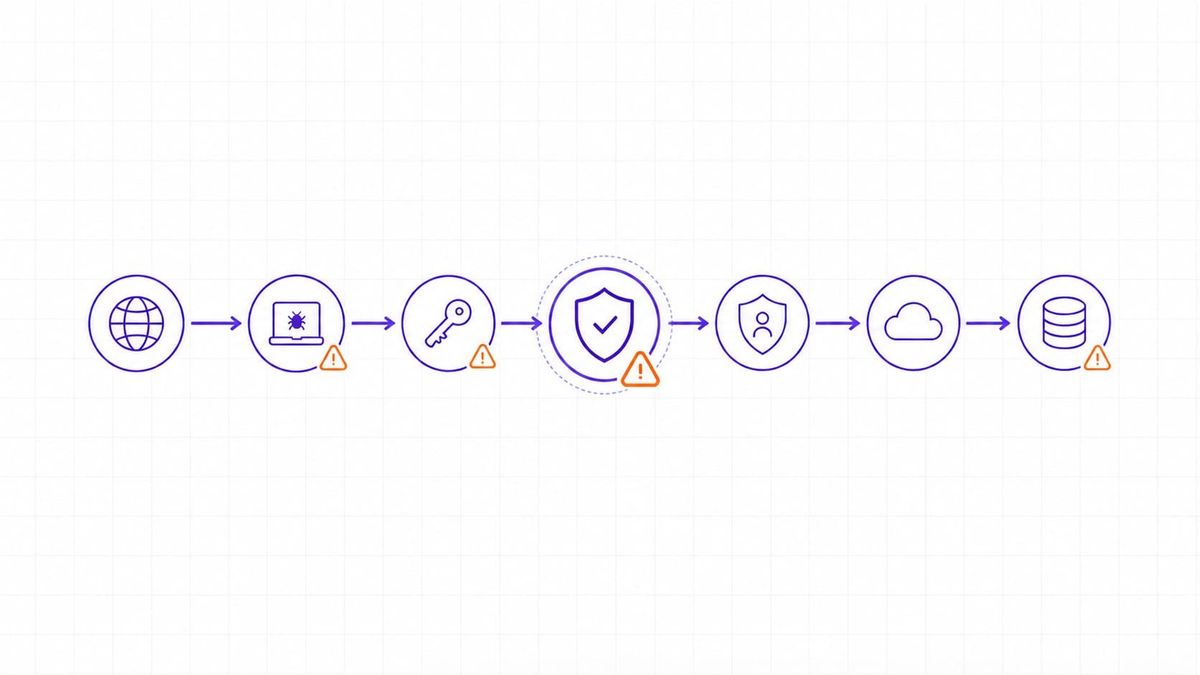
An exposure is broader than a software vulnerability. It can be an internet-facing service, a weak identity path, an unsafe cloud configuration, an overlooked asset, or a chain of individually modest weaknesses that creates a viable route to a critical system.
The word “continuous” does not mean that every control must run in real time. It means the program repeats often enough to account for changing assets, configurations, threats, and business priorities. A fast-moving cloud environment may need daily discovery and event-driven reviews, while a stable segment may justify a slower cadence.
Why CTEM Extends Beyond Vulnerability Management
Traditional vulnerability management usually begins with known assets and identified vulnerabilities. It remains essential: teams still need inventories, scanning, patching, exception handling, and verification. CTEM expands the decision model by asking additional questions:
- Is the affected asset reachable? An internet-facing service or a system connected to a credible attack path deserves different treatment from an isolated test host.
- Is exploitation occurring or likely? CISA’s Known Exploited Vulnerabilities Catalog records CVEs with evidence of exploitation in the wild and recommends using the catalog as an input to prioritization.
- What would an attacker gain? Asset criticality, sensitive data, identity privilege, and downstream access can change the urgency of a finding.
- Do existing controls interrupt the path? Safe validation can show whether segmentation, authentication, endpoint controls, or other defenses materially reduce the exposure.
- Can the organization mobilize a fix? A ranked list has little value without an owner, remediation action, deadline, exception process, and retest.
This builds on the practices covered in vulnerability assessment and attack surface management, rather than making either discipline obsolete.
The Five Stages of the CTEM Cycle
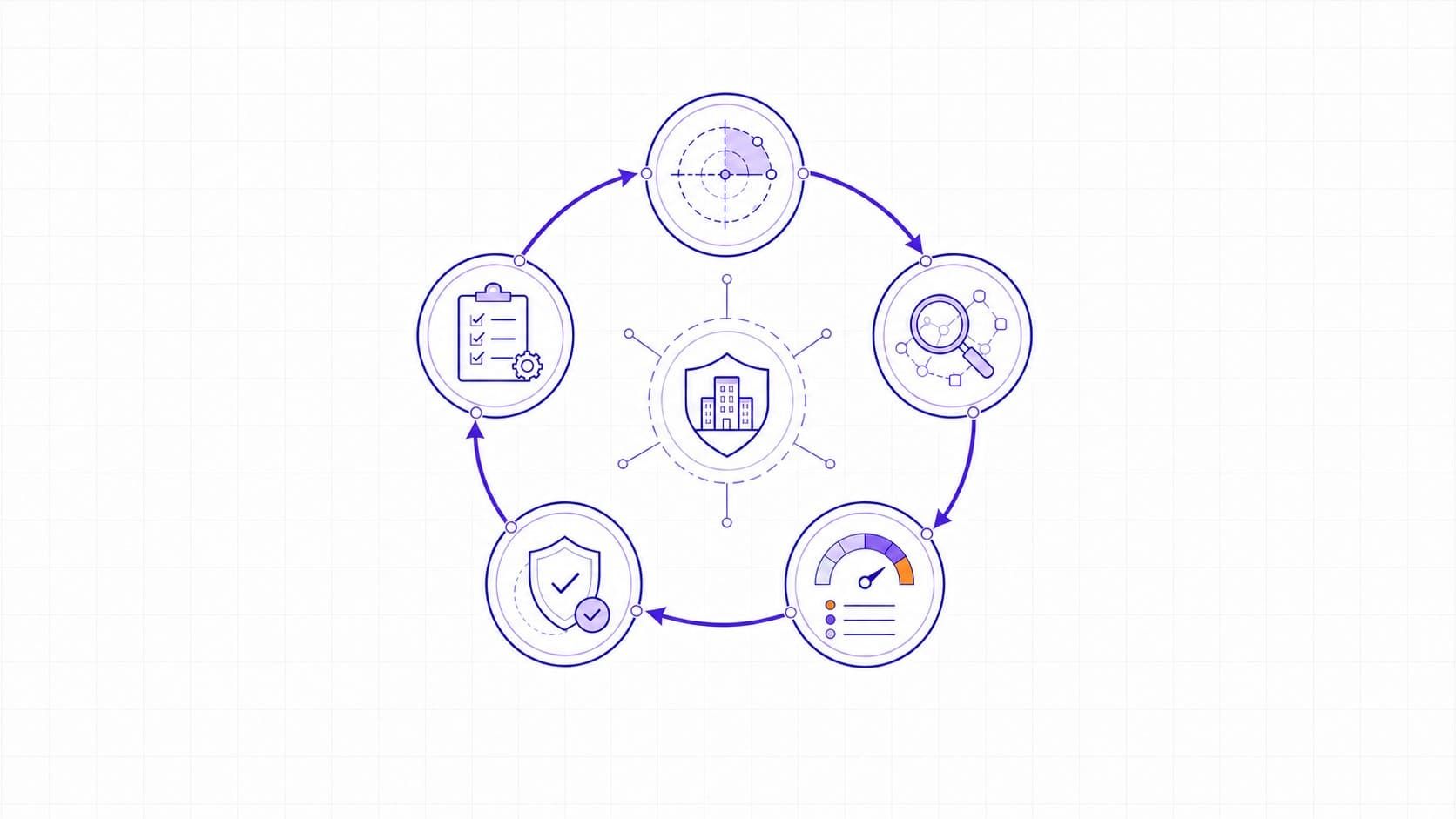
CTEM is commonly organized into five repeating stages: scoping, discovery, prioritization, validation, and mobilization. Each stage should produce an output that the next stage can use.
Stage 1 - Scoping
Choose a business-aligned scope that a team can act on. Starting with “the entire enterprise” often produces a large inventory but weak ownership. A better first scope might be the customer authentication flow, the public SaaS production environment, or the systems that handle payment data.
Document the business service, in-scope assets and identities, responsible owners, unacceptable outcomes, and review cadence. Include third-party dependencies where they create a credible path to the service.
Stage 2 - Discovery
Build a current view of assets, vulnerabilities, misconfigurations, identities, exposed services, and trust relationships within the scope. Combine sources where necessary: external attack surface discovery, cloud and identity posture data, vulnerability scanners, application security testing, configuration management, and asset inventories.
Discovery must account for unknown assets as well as managed systems. An untracked subdomain, temporary cloud endpoint, or newly opened administrative port can create exposure even if the vulnerability backlog is otherwise well managed.
Our guide to internal and external scanning explains why the two perspectives answer different questions.
Stage 3 - Prioritization
Rank exposures using multiple signals rather than CVSS alone. CVSS describes technical severity, but it does not tell you whether the asset is critical, reachable, or under active attack. Useful inputs include:
- Technical severity and exploit prerequisites. Review the CVSS vector, affected versions, required privileges, user interaction, and potential impact instead of relying only on the numeric score.
- Evidence of exploitation. Raise urgency when a vulnerability appears in CISA KEV or reliable threat intelligence shows relevant activity.
- Probability signals. EPSS estimates the probability that exploitation activity will be observed for a published CVE in the next 30 days. FIRST cautions that EPSS does not include environmental impact or compensating controls, so it is one input rather than a complete risk score.
- Exposure and attack-path context. Consider internet reachability, identity privilege, lateral movement, and whether several weaknesses can be chained.
- Business impact and ownership. Connect the exposure to a service, data set, operational dependency, and accountable team.
For more detail on the boundary between standardized severity and organizational priority, see how CVSS works in practice.
Stage 4 - Validation
Test the assumptions behind the priority. Validation can range from evidence review and configuration checks to controlled penetration testing, breach and attack simulation, or attack-path analysis. The method should match the risk and the organization’s authorization boundaries.
Validation is not permission to exploit production systems indiscriminately. Define rules of engagement, use safe checks where possible, coordinate with system owners, and stop when a test could affect availability or data integrity. A confirmed control gap can increase urgency; a control that reliably breaks the path can support a lower priority, provided the reasoning is documented.
The distinction between broad assessment and controlled exploitation is covered in vulnerability assessment versus penetration testing.
Stage 5 - Mobilization
Turn the validated priority into coordinated action. Assign an owner, agree on the fix or compensating control, set a risk-based deadline, track exceptions, and retest after the change. Mobilization may involve security, infrastructure, cloud, application, identity, and business teams.
The output is not merely a closed ticket. It is evidence that the exposure was removed or reduced, plus feedback for the next cycle. If remediation repeatedly stalls, the program should examine the cause: unclear ownership, unreliable asset data, disruptive patching, missing engineering capacity, or a priority model that the receiving team does not trust.
CTEM Inputs and Their Roles
CTEM is a program, not a single product category. Most organizations assemble it from capabilities they already have and add tooling only where a specific gap prevents the cycle from working.
|
Capability |
Contribution to CTEM |
Limitation when used alone |
|
External attack surface management |
Finds internet-facing assets, services, and changes from an outside-in perspective |
Does not fully describe internal reachability, business impact, or remediation ownership |
|
Vulnerability assessment |
Identifies known weaknesses and supports repeatable remediation and rescanning |
Can produce a large severity-ranked backlog without attack-path or business context |
|
Cloud and identity posture management |
Reveals configuration, privilege, and trust-path exposures |
Coverage depends on integrations, permissions, and the environments connected |
|
Penetration testing or adversarial validation |
Tests whether selected exposures and attack paths are viable |
Point-in-time testing cannot provide continuous discovery by itself |
|
Ticketing and workflow automation |
Assigns owners, deadlines, exceptions, and evidence of closure |
Automation cannot repair poor priorities or missing accountability |
The right architecture depends on scope. A small software company may begin with external discovery, vulnerability scanning, cloud context, and a ticket workflow. A larger hybrid organization may also need identity graphing, internal attack-path analysis, and controlled adversarial validation.
A Practical CTEM Pilot for a Lean Team
A useful pilot is narrow enough to complete one full cycle and important enough to earn attention. The following sequence works for many small and midsize software teams:
- Select one critical service. Choose a customer-facing application or business process with a known owner, then describe the impact of unauthorized access, disruption, or data exposure.
- Map the reachable environment. Record domains, IPs, cloud endpoints, APIs, repositories, identity dependencies, and third-party services that support the selected service.
- Create a shared finding set. Combine external exposure, vulnerability, cloud, identity, and application findings; remove obvious duplicates and identify missing ownership.
- Apply a documented priority model. Use severity, reachability, CISA KEV, EPSS, asset criticality, attack-path context, and compensating controls. Avoid a hidden composite score that owners cannot challenge.
- Validate a small number of top exposures. Confirm affected versions, reachable paths, and control behavior using methods approved for the environment.
- Mobilize remediation. Give every selected exposure an owner, action, due date, exception route, and retest requirement.
- Review the cycle. Measure whether the team reduced material exposure, then adjust scope, data quality, priority rules, or workflow before expanding.
For an internet-facing pilot, TopScan can support external asset discovery, recurring scanning, finding prioritization, ownership, remediation tracking, and rescanning. It should be positioned as part of the CTEM workflow, not as a replacement for internal identity analysis, penetration testing, SIEM, incident response, or governance.
Metrics That Show Whether CTEM Is Working
Avoid judging the program by the number of findings discovered or closed. A rising finding count may reflect better visibility, while a falling count may simply mean coverage broke.
Track outcomes tied to the scoped business service:
- Coverage of the selected scope. Measure the proportion of expected assets and identities with a verified owner and current assessment data; record unknown assets separately.
- Time from discovery to triage. Monitor how long a new exposure waits before the team assigns context, priority, and ownership.
- Time to reduce validated high-priority exposure. Measure from validation to verified remediation or an approved compensating control, not merely ticket closure.
- Recurrence and reopen rate. Identify exposures that return after remediation, because repeated misconfigurations often point to a deployment or governance weakness.
- Attack-path reduction. Track whether remediation removes routes to critical assets or reduces the privileges and steps available to an attacker.
- Exception age. Review accepted risks that outlive their rationale, owner, or compensating control.
These metrics make CTEM a risk-reduction loop rather than another dashboard.
Common CTEM Implementation Mistakes
Several failure modes can make a CTEM initiative look active without reducing exposure:
- Buying a platform before defining the process. Tool coverage cannot compensate for an undefined scope, missing owners, or no agreement on what constitutes acceptable risk.
- Treating every finding as an exposure of equal importance. A flat queue recreates the backlog problem CTEM is meant to address.
- Using CVSS as the complete priority model. Technical severity matters, but reachability, exploitation evidence, asset criticality, and control effectiveness determine organizational urgency.
- Validating without authorization. Aggressive testing can disrupt production or cross legal and contractual boundaries. Use explicit scope and rules of engagement.
- Automating remediation too early. Automated changes are valuable when the action is safe and repeatable. Automating uncertain fixes can turn a security issue into an outage.
- Reporting activity instead of risk reduction. Scan counts, ticket volume, and dashboard logins do not show whether viable paths to critical services were removed.
CTEM as an Operating Model
CTEM brings discipline to a familiar security problem - too many disconnected findings and too little context for action. Its value comes from the full cycle. Scope what matters, discover exposures, rank them with threat and business context, validate the assumptions, and mobilize owners to reduce the risk.
Organizations do not need to replace their security stack to begin. They need a bounded scope, trustworthy data, a transparent priority model, safe validation, and a remediation workflow that ends with verification. Once one cycle works, the program can expand without turning “continuous” into “collect everything.”