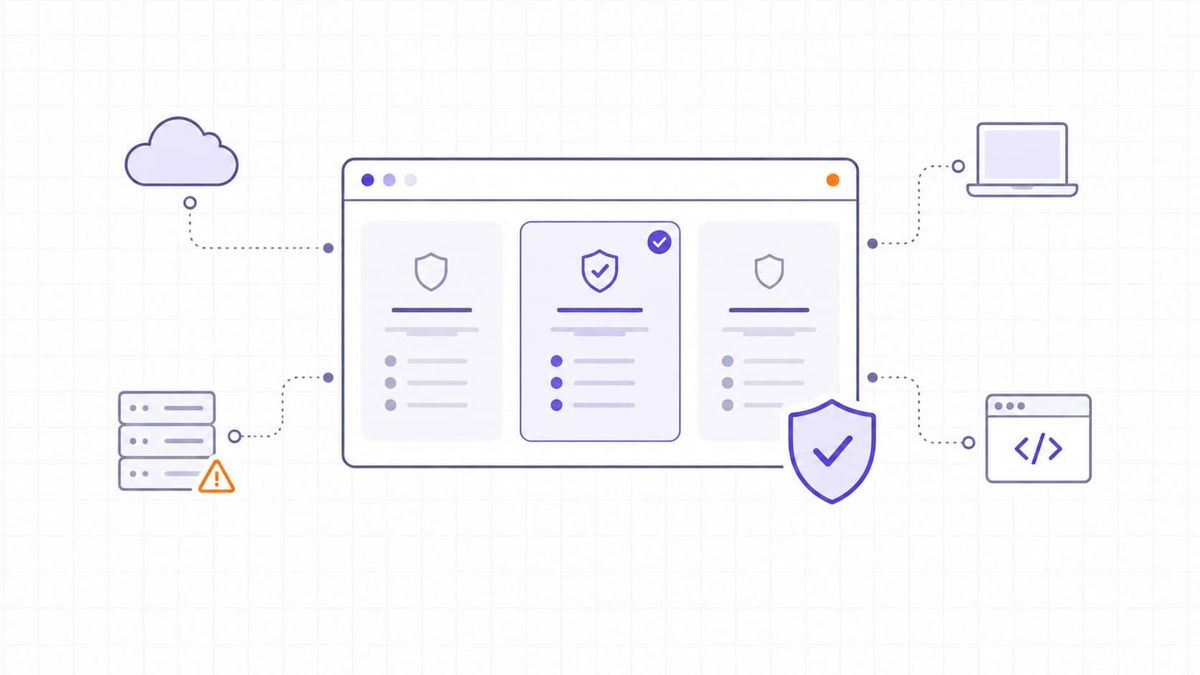

Risk-based vulnerability management (RBVM) is a way to decide which vulnerabilities deserve attention first. Instead of treating every high CVSS finding as equally urgent, it weighs three questions: is the flaw being exploited or likely to be exploited, can an attacker reach the affected asset, and what would a successful compromise disrupt?
That distinction matters when a team has hundreds or thousands of findings and one engineer responsible for remediation. CVSS remains useful for describing technical severity, but it is not a complete measure of risk. The EPSS FAQ makes the same boundary clear: EPSS estimates the probability of exploitation activity in the next 30 days, while asset context, compensating controls, and impact must come from the organization.
RBVM Turns Severity Into a Remediation Decision
Traditional vulnerability management often starts with a severity-sorted scanner report. That is a reasonable intake mechanism, but it creates a poor work queue when two findings with the same CVSS score sit on very different assets. A critical flaw on an isolated development host and a high-severity flaw on an internet-facing identity service do not create the same operational risk.
RBVM adds the missing context. It combines a technical finding with exploitation evidence, external reachability, asset ownership, business function, and the controls already in place. NIST's risk-assessment guidance frames risk assessment around threats, vulnerabilities, likelihood, and impact rather than a vulnerability score alone. NIST SP 800-30 Rev. 1 is a useful reference when documenting the model for leadership or an audit.
For a small team, the output should be simple: a list of actions with an owner, due date, and reason for priority. A complicated formula is less valuable than a queue people actually use.
Threat, Vulnerability, and Risk Have Different Roles
Threat - a potential source of harm or attack activity. For example, a ransomware affiliate scanning for exposed file-transfer servers.
Vulnerability - a weakness that could be exploited. For example, an unpatched file-transfer product affected by a CVE.
Risk - the likely consequence if a relevant threat exploits that weakness in this environment. For example, the exposed server transfers customer files and has broad internal access.
A CVE identifies a publicly disclosed vulnerability; it does not say whether your organization is affected.
For the identifier and its place in the vulnerability ecosystem, see TopScan's guide to Common Vulnerabilities and Exposures.
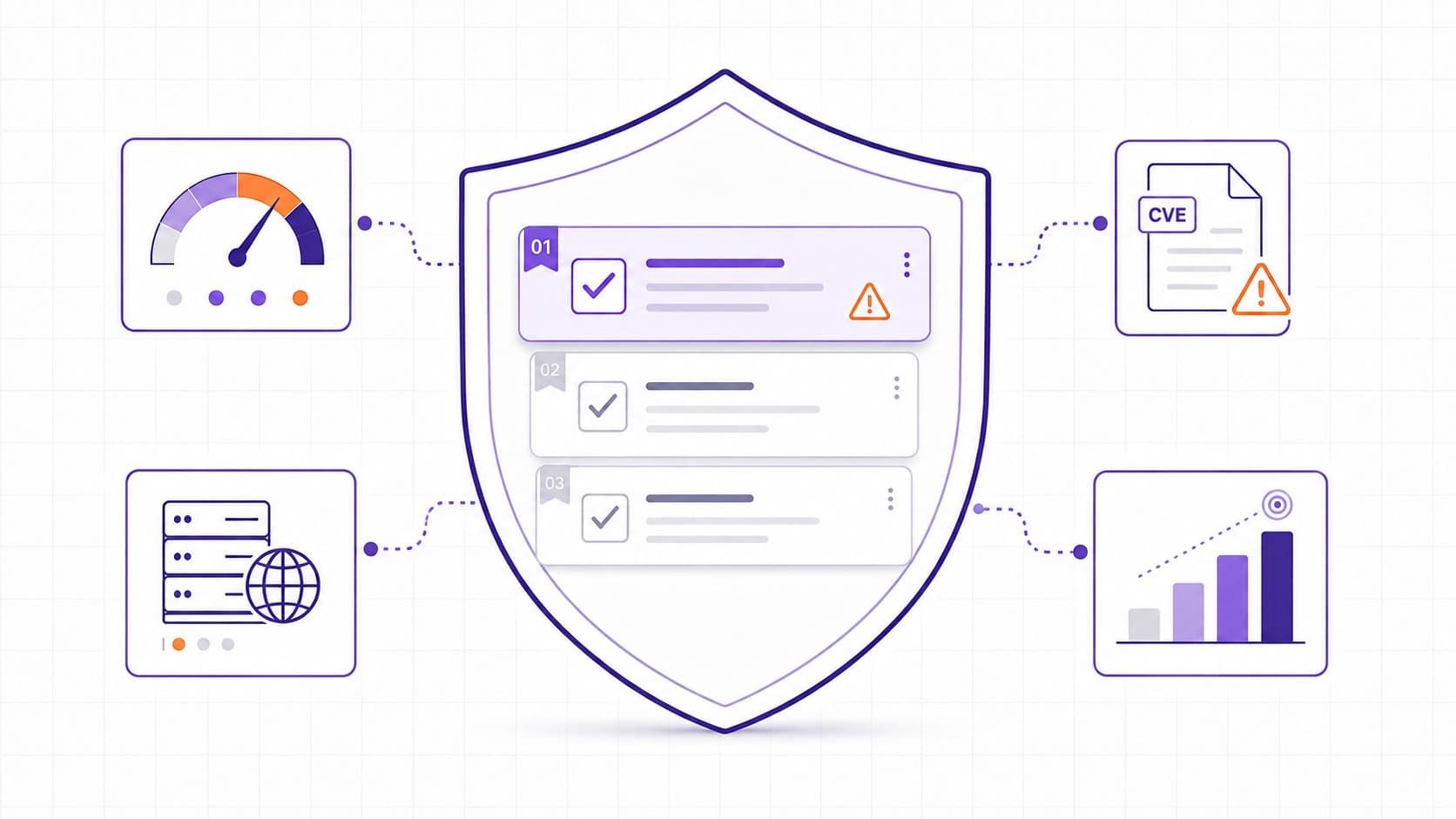
CVSS describes severity. EPSS supplies a forward-looking exploitation estimate. CISA's Known Exploited Vulnerabilities (KEV) Catalog records vulnerabilities with confirmed exploitation in the wild. Each is a signal, not a substitute for local context.
The Signals That Should Change Priority
Start with consistent, explainable inputs. A team does not need every commercial intelligence feed before it can make better choices.
- Confirmed exploitation. Put a KEV-listed vulnerability affecting a reachable asset into an expedited process. CISA says organizations should use the KEV Catalog as an input to their vulnerability-management prioritization framework.
- Exploit likelihood. Use EPSS to rank findings where exploitation is not already confirmed. It is a forecast, not a promise, and no universal threshold fits every environment.
- Asset consequence. Mark assets that process payments, administer identities, serve customers, or hold regulated data. The same CVE should rise when it affects one of these systems.
- Reachability and attack path. An internet-facing service or a weakness that enables lateral movement can be more urgent than an equally severe issue behind strong access controls. This is why attack surface management (https://topscan.me/blog/attack-surface-management-what-it-is-and-why-it-matters) belongs next to vulnerability data.
- Existing controls and patch feasibility. Segmentation, disabled features, authentication barriers, and vendor mitigations can reduce immediate exposure. Record them explicitly, then set a date to reassess rather than silently closing the finding.
Avoid multiplying CVSS and EPSS into one impressive-looking number. The resulting value has no clear interpretation. It is more useful to use documented decision rules, then explain why a finding moved up or down.
A Practical RBVM Workflow for a Lean Team
- Build an asset inventory that names an owner. Include domains, public IPs, cloud workloads, web applications, APIs, and important internal services. An unowned asset cannot receive a realistic remediation date. Vulnerability scanning provides findings, but it cannot decide business criticality on its own.
- Enrich findings before opening tickets. Add CVE, CVSS, KEV status, EPSS, exposed service, internet reachability, asset tier, owner, and available vendor mitigation. This removes the back-and-forth that otherwise happens after a ticket is assigned.
- Create a small number of response lanes. For example: emergency action for confirmed exploitation on reachable critical assets; fast remediation for high likelihood and high consequence; scheduled remediation for the rest. Define the times with the people who operate the systems.
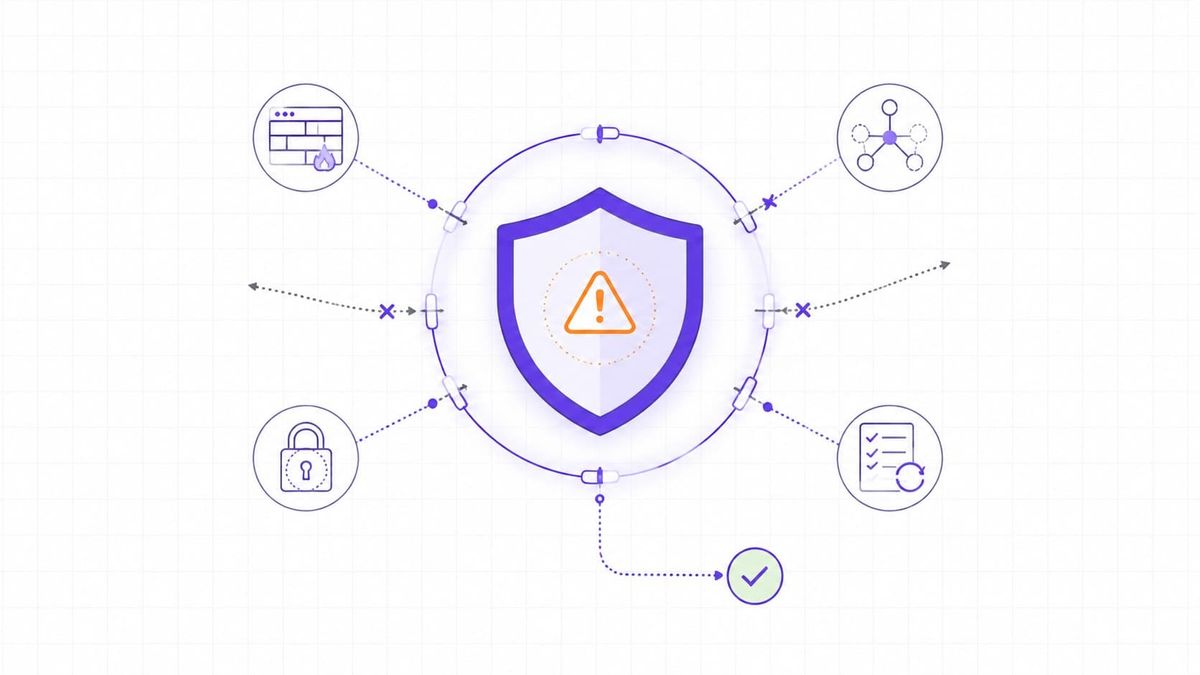
- Mitigate when patching cannot happen immediately. CISA's vulnerability-response playbooks list measures such as limiting access, isolating an asset, disabling a service, changing firewall rules, and increasing monitoring. A mitigation needs an owner and an expiry date, because it is not the same as a fix.
- Verify and learn. Rescan or otherwise confirm the remediation, record the evidence, and review exceptions weekly. Track overdue high-risk findings and time from prioritization to verified closure, not just the total number of tickets closed.
A Real Incident Shows Why the Queue Must Be Dynamic
The 2023 MOVEit Transfer incident is a concrete example of a priority changing quickly. In its advisory on the CL0P campaign, CISA reported active exploitation of the MOVEit Transfer zero-day vulnerability, CVE-2023-34362, and added it to the KEV Catalog. For an organization running an internet-exposed MOVEit server, the sensible first actions were to identify affected instances, follow the vendor's mitigation and patch guidance, limit exposure where necessary, and look for signs of compromise - not to continue working through a static list ordered only by CVSS.
The lesson is not that every new CVE is an emergency. It is that a credible exploitation signal can change the decision within hours. Build a process that can reprioritize work when CISA, a vendor, or your own telemetry changes the evidence. CISA's AA23-158A advisory is the primary source for this example.
Governance Makes Risk Acceptance Visible
RBVM still requires choices when downtime, change freezes, or legacy dependencies prevent immediate patching. Governance is the mechanism that makes those choices visible and time-bound.
Define who can accept residual risk, how long an exception lasts, and what evidence is required. A useful exception states the affected asset, the vulnerability, why immediate remediation is impractical, compensating controls, owner, approval, and review date. If an exception cannot answer these questions, it is probably a deferred ticket rather than risk acceptance.
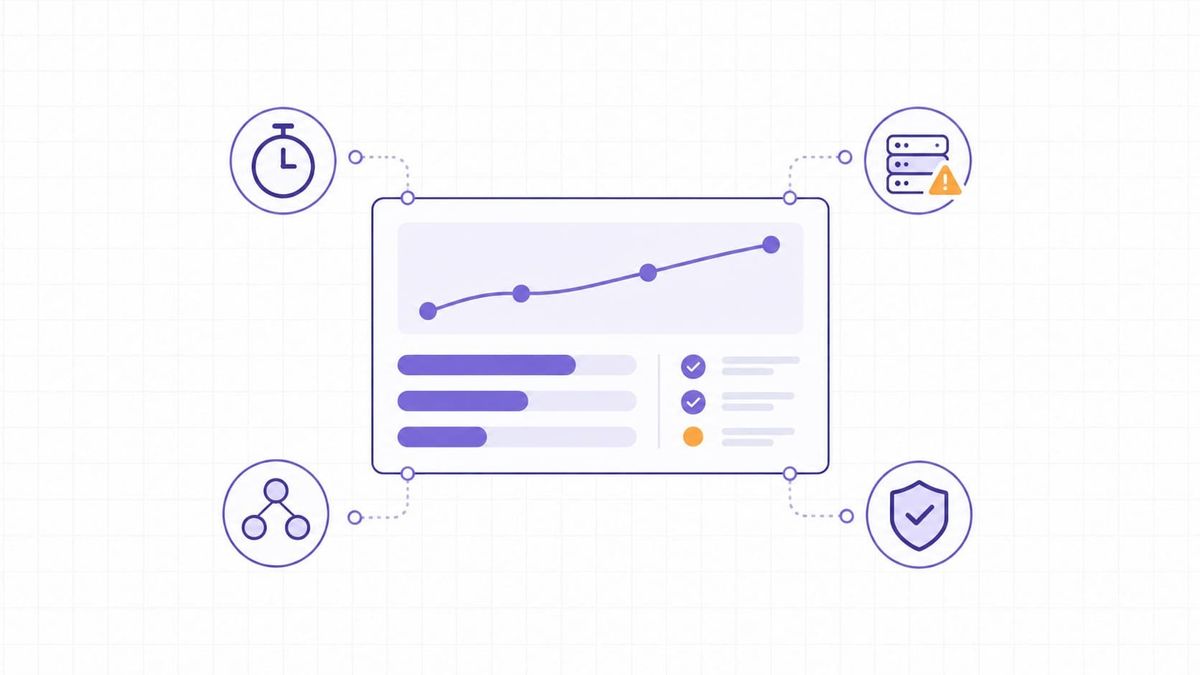
For reporting, show trends that lead to decisions: KEV findings open by asset tier, overdue urgent work, time to verified closure, and exceptions approaching expiry. Do not promise that a dashboard or a scanning platform guarantees compliance. It can provide evidence for a program, while the organization remains responsible for its controls and decisions.
Where TopScan Fits in an RBVM Program
An RBVM process needs reliable visibility into what is exposed and what changed. TopScan is designed to help small and mid-sized software teams monitor their external attack surface, identify vulnerabilities on known assets, organize findings by asset and exposure, and track remediation ownership and status. The next step for a reader assessing external exposure is TopScan Vulnerability Management.
Use a platform to keep the operational record current, then keep prioritization rules understandable enough that an engineer and a CTO can review the same queue and agree on why the first items are first.
Start With a Short, Explainable Priority Queue
RBVM succeeds when it changes daily work. Start by identifying your internet-facing and business-critical assets, joining scanner findings to KEV and EPSS data, and agreeing on response lanes with system owners. Review the rules after a real event, not only at the end of a quarter.
The best first result is not a perfect risk score. It is a shorter queue in which every urgent item has a clear reason, an accountable owner, and a verified outcome.