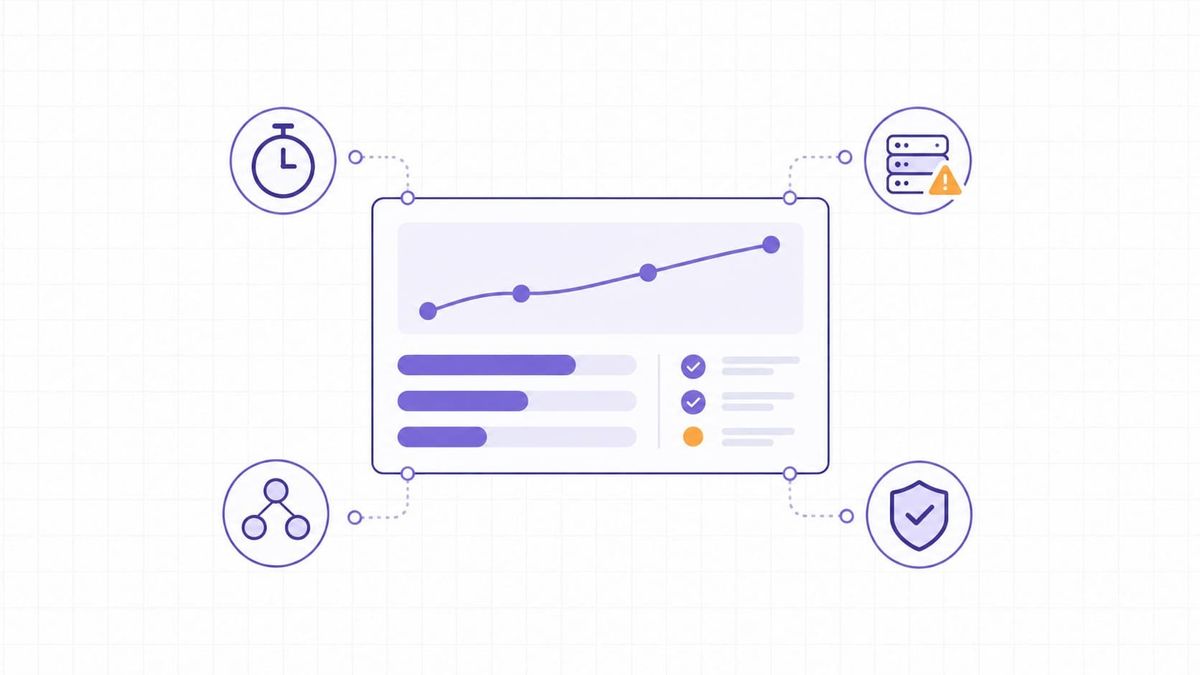

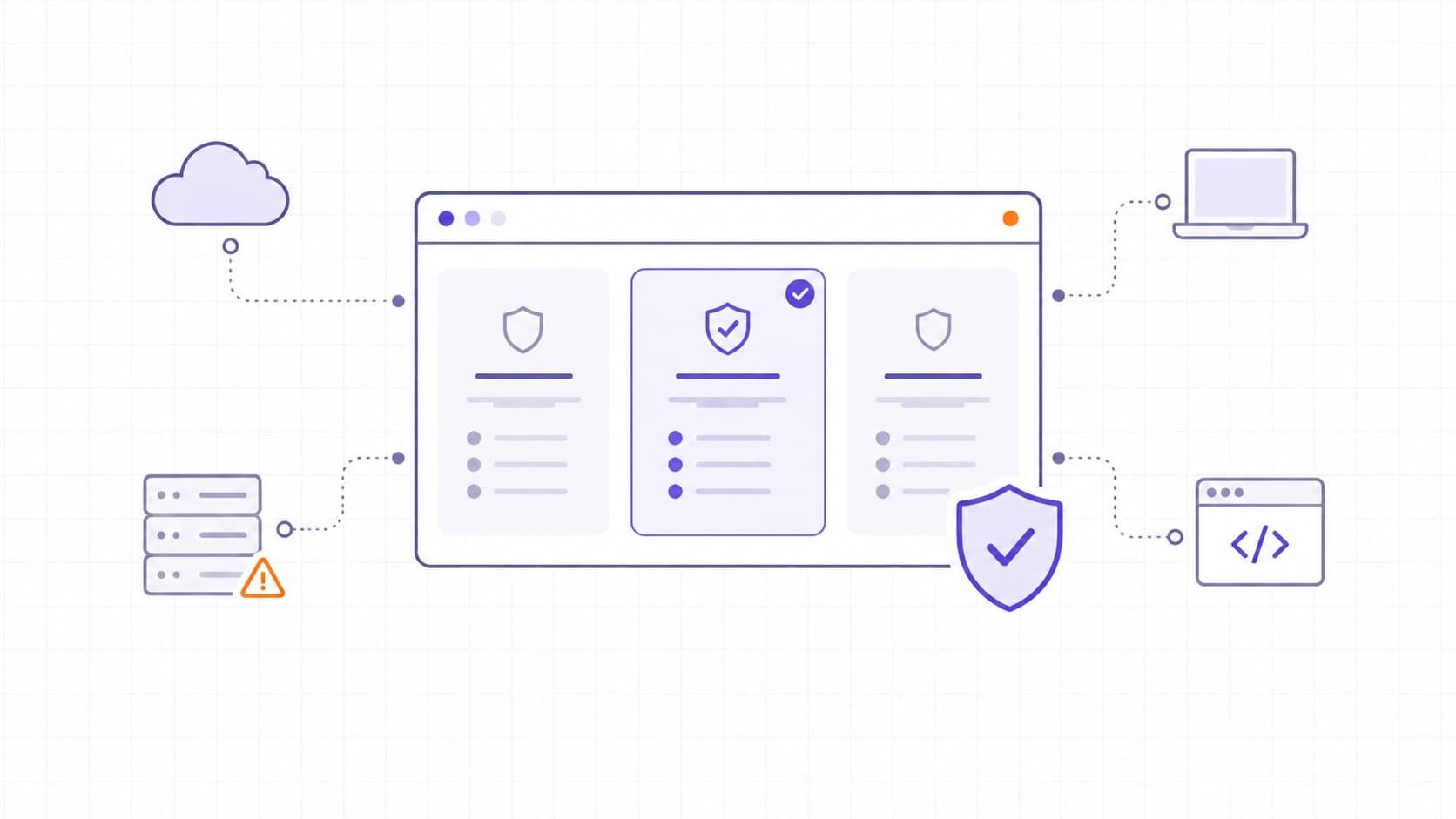
Vulnerability management software finds or collects security weaknesses, prioritizes them, and tracks the work needed to resolve them. The right choice depends on what you need to assess and who will carry out the fixes. A cloud workload platform, an endpoint patching tool, and a system that combines scanner results solve different parts of that problem.
This guide compares 10 options by coverage, operating requirements, and remediation workflow. Use it to build a shortlist, then test the candidates against your own assets.
This comparison is published by TopScan and includes TopScan. It is based on public vendor documentation checked on September 15, 2026; no hands-on performance benchmark was conducted. Product fit recommendations are editorial judgments, and the order is not a ranking.
Vulnerability Management Software Comparison at a Glance
Start with the gap you need to close. The table summarizes each product's role; the individual sections below link to the supporting documentation and explain what to test.
|
Software |
Main Role |
Consider It When |
Check Before Buying |
|
TopScan |
External vulnerability management |
A CTO or DevOps lead needs to track exposed assets and findings |
Whether your required assets are reachable and covered |
|
Qualys VMDR |
Assessment and prioritization across hybrid IT |
You need coordinated inventory, assessment, and remediation planning |
Sensors, permissions, and patch deployment entitlements |
|
Tenable Vulnerability Management |
Infrastructure assessment and risk prioritization |
You need broad assessment across a mixed estate |
Scanner placement, agents, and the quoted product bundle |
|
Rapid7 InsightVM |
Infrastructure scanning and remediation coordination |
Security and IT need shared remediation projects |
Console operation and the scope of Exposure Command |
|
Wiz |
Cloud vulnerability and exposure management |
Cloud permissions, workloads, and attack paths affect priorities |
Cloud coverage and any required runtime sensor |
|
ThreatMapper |
Open-source workload security visibility |
Engineers can operate a self-hosted assessment platform |
Maintenance, resource needs, and support arrangements |
|
NinjaOne |
Endpoint vulnerability assessment and patch workflows |
Endpoint software remediation is your main gap |
Supported software and device telemetry freshness |
|
Intruder |
Managed scanning and exposure monitoring |
You want a hosted service across selected asset types |
Internal, application, and cloud coverage in your plan |
|
Nucleus Security |
Consolidation and orchestration of security findings |
Several existing tools produce disconnected queues |
Connector coverage and asset matching quality |
|
ManageEngine Vulnerability Manager Plus |
Endpoint assessment and remediation |
IT needs vulnerability, patch, and configuration workflows together |
Supported platforms, applications, and edition limits |
What Vulnerability Management Software Does
A vulnerability management platform turns findings into a maintained record of affected assets, priorities, owners, and remediation status. Some products collect findings through their own scanners or agents. Others import results from existing tools. Their coverage depends on connected accounts, supported technologies, permissions, and configuration.
Vulnerability scanning is the assessment activity within that process. Management adds the decisions and follow-up: validate the finding, assign responsibility, choose a response, and check whether the fix worked.
Remediation can mean installing a patch, changing a configuration, updating a dependency, or retiring an exposed service. A product may recommend these actions or create tickets without executing the changes. Ask separately about detection, workflow automation, patch deployment, and verification.
Criteria for Evaluating Vulnerability Management Tools
Coverage and Collection Methods
Write down the assets that must be assessed before comparing features. Include public services, internal servers, employee devices, cloud workloads, and application components where relevant. Then ask the vendor to show how each category enters the inventory and receives an assessment.
An external scan observes reachable services. An authenticated infrastructure scan uses credentials to inspect a host. An endpoint agent gathers local data, while a cloud integration can provide configuration or workload information through supported APIs and other collection methods. These approaches answer different questions. Agentless does not automatically mean shallow, and an installed agent does not prove complete coverage.
For short-lived workloads, ask how quickly the tool collects evidence and what remains after the workload disappears. For public services, check how newly discovered hosts are reviewed before scanning. TopScan's asset discovery and perimeter monitoring illustrates this distinction: discovering a host and approving it as a monitored target are separate steps.
Prioritization with Traceable Evidence
A priority score should have an explanation that an engineer can inspect. Ask which affected asset, software version, exposure, and threat evidence caused an issue to rise in the queue.
CVSS, KEV, and EPSS provide different signals:
- CVSS Base scores describe technical severity. They do not, on their own, measure your organization's risk. FIRST recommends considering additional context when using CVSS to make decisions.
- CISA's Known Exploited Vulnerabilities catalog records vulnerabilities with known exploitation. A match can strengthen the case for urgent action, but the catalog does not inspect your systems or prove that a particular host is affected.
- EPSS estimates exploitation probability over the next 30 days. It describes the likelihood of exploitation in the wild for a published CVE, rather than the probability that your company will be breached.
Keep the timestamps and original evidence visible. A changing score should not obscure why a deadline was set.
Our guide to vulnerability prioritization explains how to combine these signals with asset exposure and business impact.
Consider a documented example: CISA added the MOVEit Transfer SQL injection vulnerability CVE-2023-34362 to KEV on June 2, 2023. The entry identifies known ransomware campaign use and directs organizations to apply vendor updates.
For a pilot, use that record as an evidence-handling example: can the product connect a CVE to the affected installation, show the exploitation signal, and route the work to its owner? Test the workflow using an existing record or an isolated test environment. A CVE lookup alone cannot establish that the affected application exists in your estate.
Ownership, Remediation, and Verification
Follow one finding through the proposed workflow. The receiving engineer should see the affected asset, evidence, recommended action, owner, and deadline. A service-level agreement (SLA) defines the time allowed for a response or fix; it needs an escalation path when work is overdue.
Check what happens when a ticket closes. Does the platform verify the change, wait for a rescan, or accept the ticket status as proof? A failed scan or lost connection should remain visible as a coverage problem. It should not quietly turn an unverified finding into a successful fix.
NIST SP 800-40 Rev. 4 includes verification in the enterprise patch management process. That established practice gives you a concrete evaluation criterion: the product should preserve evidence that the update was installed successfully (NIST patch management guidance).
Operating Effort and Total Cost
Compare quotes for the same asset scope. Ask what counts as a billable asset, how temporary workloads are counted, and whether rescans, integrations, reporting, retention, and support are included. Add the time needed to maintain collectors, resolve credential failures, and tune findings.
Data handling also belongs in the evaluation. Confirm storage location, retention, export options, access controls, and the permissions needed by each connector. A technically capable product can still be difficult to adopt if its operating requirements do not fit your team.
Editorial recommendation: for a small team, start with the smallest combination that covers the main exposure and supports a complete remediation workflow. A broader platform can justify its additional administration when you have diverse assets, several scanning tools, or multiple teams responsible for fixes.
10 Vulnerability Management Tools and Their Tradeoffs
1. TopScan
TopScan is a candidate for software teams where a CTO or DevOps lead owns security alongside other responsibilities. Its vulnerability management workflow focuses on internet-facing domains, IPs, APIs, cloud endpoints, and exposed services.
The platform brings findings into a shared list with severity, status, and affected assets. It provides SLA timers, false-positive and snooze states, and reporting for internal reviews. Findings that reappear after a new scan can reopen automatically. These are documented in TopScan's vulnerability management workflow.
For the pilot, follow an exposed service from discovery through remediation and a fresh scan. Check that the evidence is sufficient for the engineer who will fix it. If you also need authenticated assessment of private infrastructure or endpoint patch deployment, establish that coverage separately before selecting a toolset.
2. Qualys VMDR
Qualys VMDR combines asset inventory, vulnerability and configuration assessment, threat-informed prioritization, and patch identification across hybrid IT. Its documentation describes cloud agents and other sensors, with TruRisk adding asset and business context to prioritization.
Consider it when coordinated assessment across different infrastructure types is a requirement. The buying question is how the intended deployment will cover your estate: which sensors are needed, who maintains credentials, and which teams will use the results?
Ask the vendor to demonstrate the transition from an identified patch to an approved deployment. Confirm that the quoted package includes the remediation capabilities you need. Patch identification alone is insufficient evidence that the subscription can install it.
3. Tenable Vulnerability Management
Tenable's current product page presents Tenable One Vulnerability Management, including asset discovery, assessment, Vulnerability Priority Rating (VPR), and remediation coordination. VPR adds threat intelligence to help order the work.
Shortlist it for an infrastructure assessment program that needs consistent findings and prioritization across a mixed estate. During evaluation, request a deployment design showing scanners, agents where applicable, network access, and credentials for the assets in scope.
Tenable also documents a Patch Management product. Ask which capabilities are included in your quote, including web application assessment and patch deployment. Product family names should not substitute for a written coverage and licensing breakdown.
4. Rapid7 InsightVM
InsightVM combines vulnerability assessment with remediation projects, reporting, and coordination between security and IT. Its documented architecture includes a Security Console and Scan Engines. Its Active Risk strategy uses CVSS and threat intelligence to inform prioritization.
Rapid7 now presents InsightVM as the vulnerability management technology within Exposure Command, with broader coverage depending on the package. The vendor still offers an InsightVM trial.
It merits evaluation when shared remediation work is a major requirement. Check deployment responsibilities, ticket synchronization, and how engineers demonstrate closure. Confirm the exact cloud, application, and attack surface features in the proposed package.
5. Wiz
Wiz is a cloud security platform that connects vulnerability findings with cloud context. Wiz Cloud documents agentless assessment of supported workloads and uses its Security Graph to put findings in context alongside other exposures. This makes it relevant when permissions, network access, and workload relationships affect remediation priorities.
In the pilot, inspect an actual risk path and the evidence behind each connection. Confirm coverage for your cloud services, containers, and short-lived workloads rather than assuming that connecting an account assesses every resource.
Wiz also offers runtime capabilities using a sensor; its Cloud page identifies the Wiz Sensor as an add-on. Distinguish periodic workload assessment from the runtime telemetry and protection you expect, and confirm the deployment and package requirements.
6. ThreatMapper
ThreatMapper is an open-source platform for finding vulnerable components, exposed secrets, and configuration issues in running workloads and infrastructure. Its repository describes agent-based inspection, agentless monitoring, and ThreatGraph visualization for prioritization. The project uses the Apache 2.0 license.
Consider it when engineers want control over a self-hosted deployment and can maintain its console, sensors, and data collection. The repository points to threatmapper.org as the project's maintainer site; review the current release history and support arrangements before adopting it.
Open source removes a software license fee for the project, but hosting and maintenance still require resources. Run a representative deployment and measure operating effort. Finding an attack path does not by itself establish that the platform will block an attack.
7. NinjaOne Vulnerability Management
NinjaOne's current vulnerability management offering assesses installed endpoint software by correlating inventory telemetry from its agent with CVE intelligence. It also uses last-known software state for offline devices and connects vulnerability records to patch remediation workflows.
This makes it a candidate when IT's main task is identifying and updating vulnerable endpoint software. Check support for your actual applications and operating systems, then test detection, approval, installation, and confirmation of an update.
Pay attention to offline devices: an assessment based on the last reported inventory should expose its age. Keep network exposure and custom application testing as separate coverage requirements in the evaluation.
8. Intruder
Intruder offers a hosted service covering vulnerability scanning and exposure monitoring. Its current site lists external and internal scanning, web application and API testing, cloud configuration checks, prioritization, and reporting.
Consider it when you want the vendor to operate the scanning service while your team handles findings. The range of listed capabilities makes plan selection important: ask which asset types, scanning methods, integrations, and reporting functions your subscription includes.
Test an internal target and an authenticated application if those are part of your scope. Confirm the required components, credentials, and reachability. Evaluate how much explanation a developer needs to act on a finding, rather than relying on a general claim that one dashboard is easier than another.
9. Nucleus Security
Nucleus consolidates findings from security tools into a shared system for prioritization and remediation coordination. Its platform documentation describes normalization, deduplication, asset and business context, ownership assignment, SLA tracking, and bidirectional Jira and ServiceNow tickets.
It is relevant when the main problem is fragmented information from several existing tools. Evaluate the connectors you actually use and inspect how their asset identifiers are reconciled. Two records for the same server should not create conflicting ownership or hide a finding.
Test a connector failure and a stale data feed as well as the normal workflow. Consolidation depends on the quality and freshness of upstream evidence. Confirm which assessment tools will remain responsible for collecting it.
10. ManageEngine Vulnerability Manager Plus
ManageEngine Vulnerability Manager Plus combines vulnerability assessment with patching, configuration management, and reporting. Its product page documents assessment of endpoints and native patching for supported operating systems and third-party applications.
Consider it when an IT team wants to handle endpoint findings and remediation in the same operating process. Verify the supported platform and application catalog against your inventory, and check the limits of the edition being proposed.
A suitable pilot should include a patch approval, a scheduled deployment, and a follow-up assessment. Also test a finding whose response requires a configuration change. This shows whether the product fits your remediation work beyond installing available updates.
Choose the Tool That Completes Your Remediation Workflow
Build a shortlist of two or three candidates from the relevant category. Give each the same authorized scope, required integrations, and evidence requirements. Include a representative sample of assets and a known finding that can be safely resolved.
Use five checkpoints:
- Establish coverage. Compare discovered and assessed assets with your reference inventory. Record unsupported systems, failed connections, and missing permissions.
- Validate findings. Inspect the evidence for selected issues. Record incorrect matches and the work needed to confirm or dismiss them.
- Assign the work. Send a finding to its actual owner with the asset, remediation instructions, and deadline. Check that the recipient has enough information to act.
- Verify a change. Apply an approved fix and collect fresh evidence. Keep unresolved, temporarily mitigated, and accepted risks distinguishable.
- Review the operating burden. Export the results and record setup, triage, and maintenance effort. Compare the full cost of the tested scope.
Agree on acceptance criteria before the pilot starts. For example, every in-scope asset must either have a current assessment or an explicit coverage exception, and a completed fix must have verification evidence. Select the product that meets those criteria within the team's available capacity.