
Nearly every online service depends on DNS. If DNS fails or is tampered with, users may not reach websites, APIs, email systems, or internal services.
In practice, DNS security is about answering five questions: who controls the domain, who can change records, which servers answer queries, whether DNS data can be trusted, and whether unusual DNS behavior is visible in logs.
Because so many services depend on DNS, DNS weaknesses can quickly affect both security and operations. NIST’s current DNS deployment guidance treats DNS as a foundational security service, not just a convenience layer.
That makes DNS a common target for attackers. If attackers can tamper with DNS responses, abuse recursive services, hijack registrar access, or disrupt authoritative name servers, they can redirect traffic, steal data, or make services unavailable. To protect an organization’s online presence, it is important to understand where DNS vulnerabilities exist and how to reduce them in practice.
DNS Vulnerabilities Explained
DNS vulnerabilities are weaknesses in the Domain Name System itself, in DNS software, or in the way DNS services are deployed and managed. DNS was designed long before modern security expectations, so many of its original assumptions favored availability and interoperability over authentication, confidentiality, and integrity. NIST’s DNS guidance and IETF privacy documents both reflect this reality.
Not every DNS security issue is a software vulnerability. Many high-impact DNS problems are configuration or ownership problems: open recursion, weak registrar protection, unrestricted zone transfers, stale records, missing monitoring, or DNS servers performing roles they should not perform.
At a basic level, DNS translates domain names into IP addresses so users do not have to remember raw numeric addresses. That function is simple from the user’s perspective, but the system behind it includes recursive resolvers, authoritative servers, caches, registrars, zone data, and multiple trust relationships. Each of those layers can create security risk if it is misconfigured, outdated, or exposed more broadly than intended.
DNS as a High-Impact Attack Surface
DNS is a high-impact attack surface because almost every online service depends on it. If DNS resolution fails or is manipulated, websites may become unavailable, APIs may break, mail delivery may fail, and users may be redirected to the wrong destination. That is why DNS incidents can quickly move from a technical problem to a business outage.
For a broader view of exposed assets, domains, and external dependencies, see: What Is Attack Surface Management?
DNS attacks can also spread their impact through caching. A poisoned or tampered response may continue affecting clients until the cached entry expires, which means a single malicious change can persist beyond the original moment of compromise. That is one reason integrity controls such as DNSSEC matter.
DNS security often fails because ownership is unclear. Infrastructure teams, security teams, application owners, and registrars may all touch DNS, but no one may own the full risk picture.
Locations of DNS Security Risk
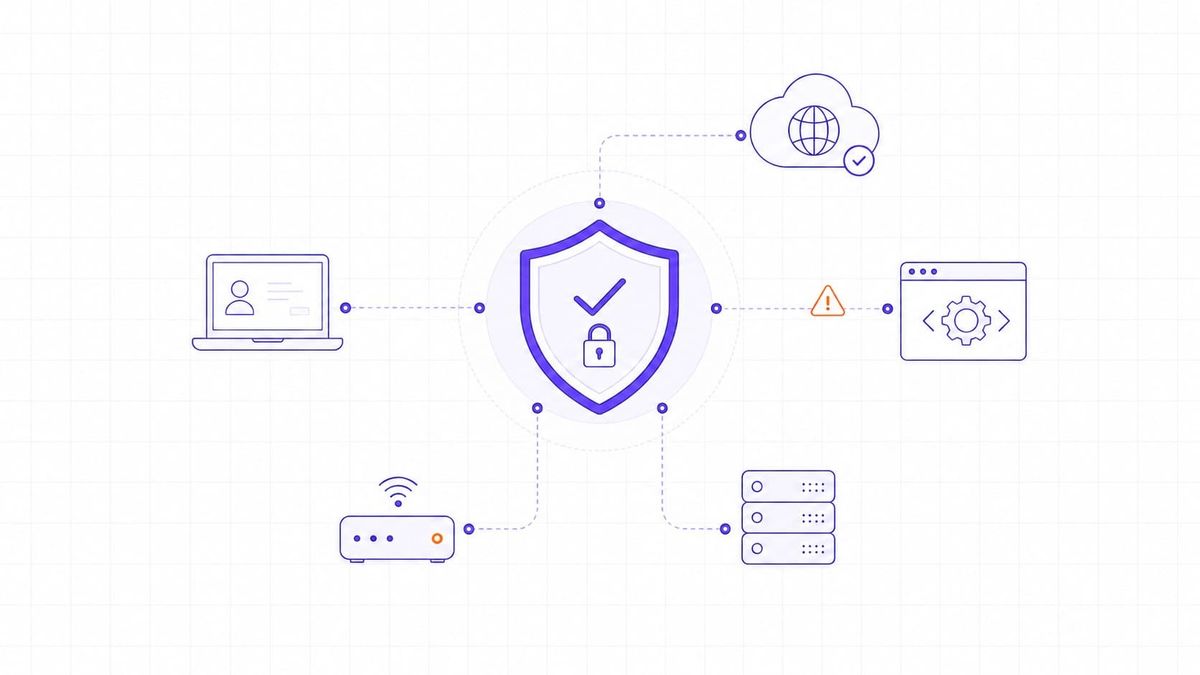
DNS security risks do not live in one place. They exist across the broader DNS ecosystem, especially in the components involved in resolution and control.
Recursive resolvers are a major risk area because they accept queries, cache responses, and may be abused if recursion is exposed too broadly. Authoritative servers are another critical location because they publish the data that tells the rest of the internet where a domain should point. If that data is changed or served incorrectly, users may be redirected or services may fail.
Registrar accounts create a separate but equally serious risk because an attacker who gains control there may be able to alter DNS records or transfer domain control. Client devices are also part of the picture, since malware can change local DNS behavior or force a system to use an attacker-controlled resolver.
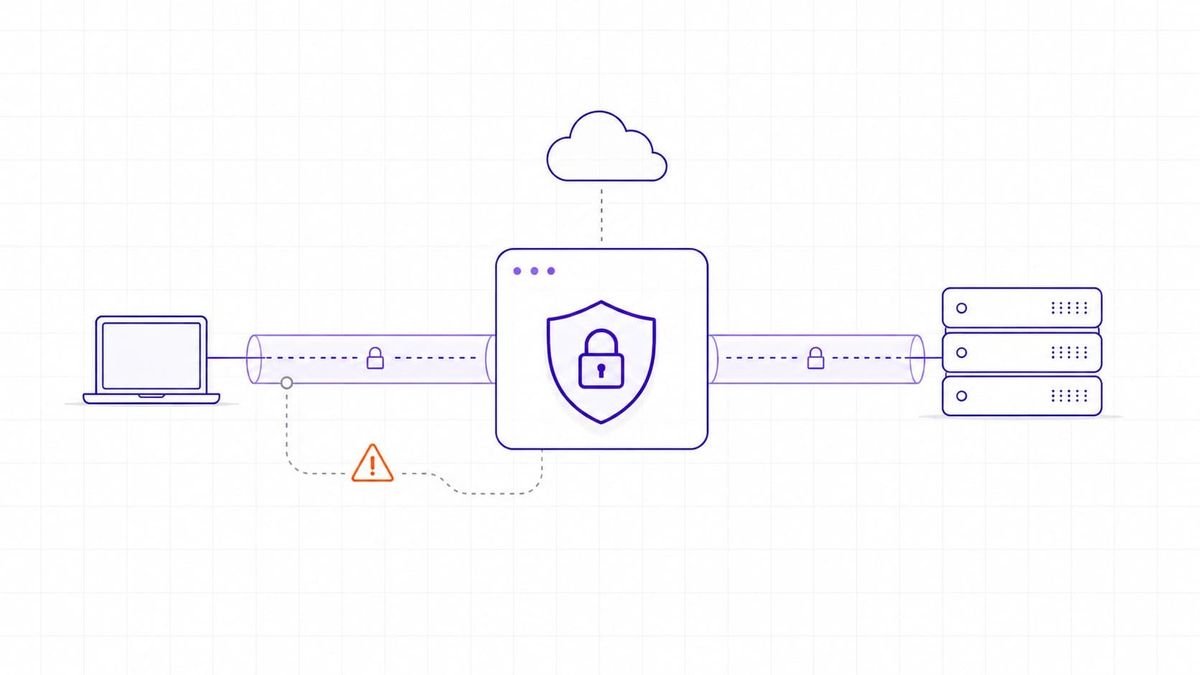
Traditional DNS transport is another source of risk. Much DNS traffic has historically been sent without encryption, which makes it easier for on-path observers to inspect or tamper with traffic between clients and resolvers. DNS over TLS and DNS over HTTPS were introduced to add confidentiality and integrity protection to that transport layer.
DNS Resolution and Risk Concentration
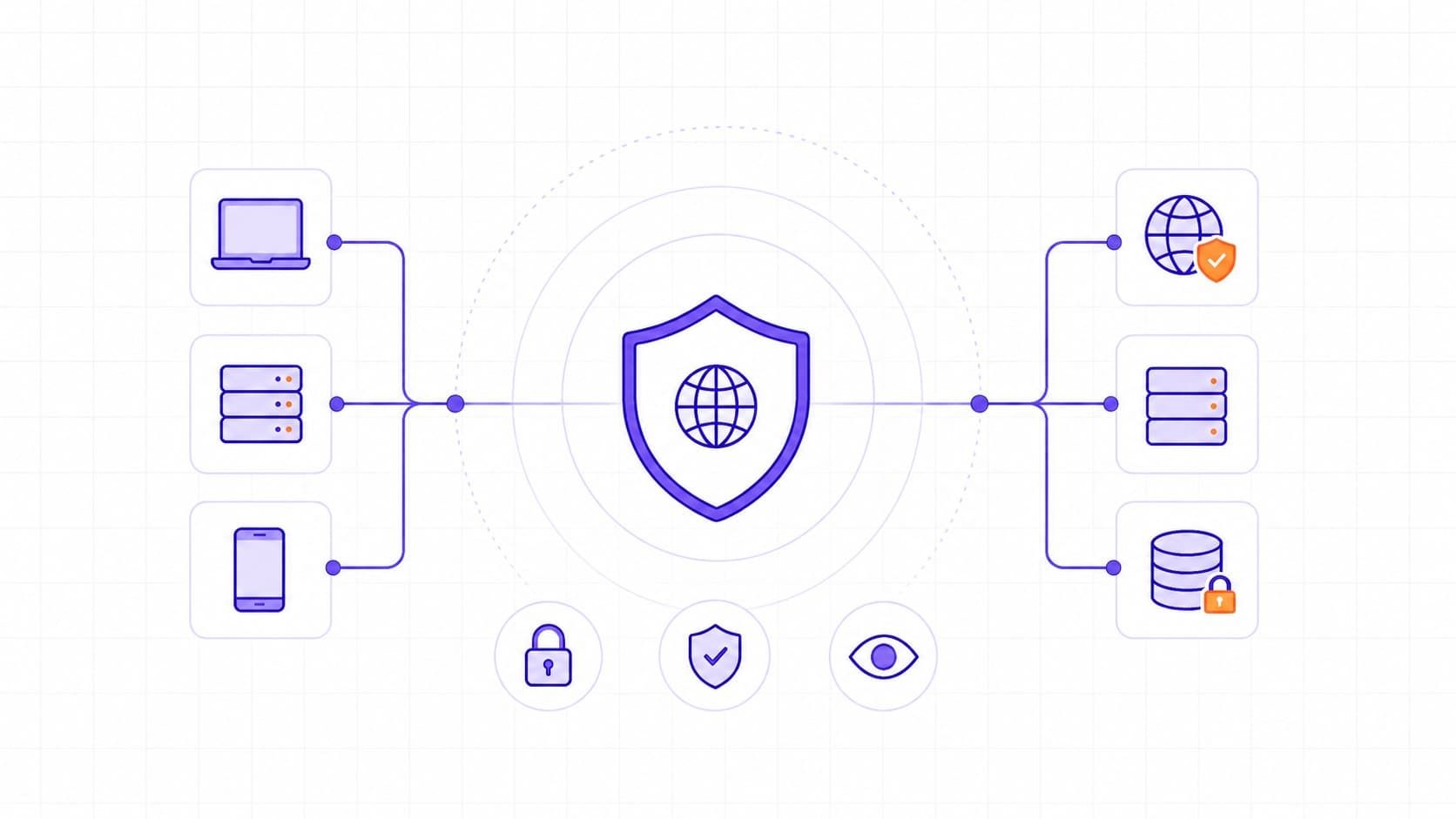
A typical DNS lookup starts when a client needs the IP address for a domain. The client checks cache first, then sends the request to a recursive resolver if the answer is not already available locally. The resolver may then query authoritative name servers before returning the result to the client.
From a security perspective, the key point is that different risks attach to different parts of that workflow. Recursive resolvers are exposed to cache poisoning, abusive recursion, and certain denial-of-service patterns. Authoritative servers are exposed to record tampering, zone transfer leaks, and disruption attacks. Registrar accounts are exposed to account takeover. The client-to-resolver path is exposed to privacy and interception risks unless protected with encrypted DNS transports.
Main Categories of DNS Vulnerabilities
DNS vulnerabilities usually fall into three broad categories: protocol and design weaknesses, implementation flaws, and configuration errors.
Protocol and design weaknesses exist because classic DNS did not originally include strong built-in authentication or confidentiality. DNSSEC helps add origin authentication and integrity for DNS data, but it does not provide privacy for DNS traffic. Privacy on the transport path is instead addressed by mechanisms such as DoT and DoH.
Implementation flaws appear in the software that handles DNS requests and responses. Like any network-facing software, DNS servers and resolvers can suffer from memory bugs, weak randomness, poor input validation, and other coding issues that create exploitable conditions. NIST explicitly notes that DNS components are susceptible to platform, software, and network-level vulnerabilities just like other services.
Configuration errors are often the most common and the most practical to fix. Open recursion, permissive zone transfer settings, missing DNSSEC validation, weak registrar protection, outdated daemons, and overexposed services all fit into this category. These are not theoretical weaknesses in the protocol. They are deployment mistakes that attackers regularly take advantage of.
Major DNS Attack Types
DNS cache poisoning and spoofing work by inserting false DNS data so users are sent to the wrong destination. If poisoned data is accepted and cached, the effect can continue until the cache entry expires. DNSSEC is designed in part to reduce this class of risk by allowing resolvers to validate signed data. In practice, teams should combine DNSSEC validation with resolver hardening, patching, and monitoring for abnormal resolver behavior.
DNS tunneling hides data or command traffic inside DNS requests and responses. Because DNS is widely allowed through network boundaries, tunneling can be used for covert command-and-control or data exfiltration if organizations do not inspect DNS traffic closely enough. Useful defenses include DNS logging, anomaly detection, egress controls, and alerting on unusual query volume, long labels, rare domains, or suspicious TXT record usage.
DNS rebinding abuses trust decisions made by browsers or local devices by changing the IP address associated with a domain name over time. That can allow a malicious page to make a browser interact with internal systems or local services that were never meant to be exposed to the public internet. Practical defenses include hardening browsers and applications, restricting local admin interfaces, and validating Host headers and origin assumptions.
DNS amplification is a denial-of-service technique in which attackers use DNS servers to reflect and amplify traffic toward a victim. This usually depends on exposed recursive behavior or oversized responses. Response rate limiting and recursion control are important defenses here. NIST’s DNS deployment guidance focuses heavily on reducing misuse of this kind.
Business Impact of DNS Attacks
DNS attacks are not just technical annoyances. They can create service outages, redirect customers to malicious destinations, expose credentials, support phishing, and enable data exfiltration. Because DNS underpins so many core services, even a narrow DNS compromise can have a wide operational blast radius.
One practical example is CISA’s 2019 emergency action on DNS infrastructure tampering. CISA warned that attackers were compromising credentials for accounts that could change DNS records, then modifying records to redirect traffic. Its mitigation steps included MFA for DNS-related accounts, reviewing DNS records for unauthorized changes, and monitoring certificate transparency logs. This shows why DNS risk is not limited to DNS servers themselves. Registrar and DNS management accounts can be just as important.
That is why DNS security belongs inside the broader risk management and vulnerability management process. Teams should treat DNS as production-critical infrastructure and not as a background service that only gets attention after something breaks.
Assessing DNS Vulnerabilities
A practical DNS assessment should start with recursion controls. Teams should verify whether recursive services answer queries from the public internet when they should not. Open recursion is one of the clearest signs of unnecessary DNS exposure. NIST’s current guidance recommends clear separation of roles and careful control of recursive behavior, especially for internet-accessible name servers.
A recursive resolver should not be a public utility unless it is intentionally designed and protected for that role. Unrestricted recursion can turn an internal service into a tool for abuse.
Zone transfer testing is another important step. If an unauthorized AXFR or IXFR request succeeds, the server may be leaking an entire zone to whoever asks. That gives attackers a ready-made inventory of subdomains, hosts, and dependencies. Zone transfers should be restricted to approved secondary DNS servers and other trusted systems.
Teams should review stale DNS records. Old CNAMEs, abandoned subdomains, records pointing to decommissioned cloud services, and forgotten test names can create takeover or misrouting risk. This is not a DNS protocol flaw, but it is a common operational weakness in large and changing environments.
Teams should also review amplification potential by comparing request size to response size, especially for public-facing DNS infrastructure. DNSSEC status needs to be checked from both sides: authoritative services should be signed correctly, and recursive resolvers should validate signatures. Finally, logs should be reviewed for unusual query sources, repeated failures, suspicious transfer attempts, and traffic patterns that do not match normal behavior.
Table 1. DNS security assessment checklist
| Check | Why it matters | Example question |
|---|---|---|
| Registrar protection | Prevents unauthorized domain changes. | Is MFA enabled for all DNS and registrar admins? |
| Authoritative server exposure | Protects published DNS data. | Are authoritative servers patched, redundant, and role-limited? |
| Recursive resolver access | Prevents open recursion and abuse. | Can untrusted internet clients use our resolver? |
| Zone transfer controls | Prevents full zone leakage. | Are AXFR/IXFR transfers restricted to approved servers? |
| DNSSEC status | Adds integrity and origin validation. | Are zones signed and are resolvers validating? |
| Encrypted transport | Protects the client-to-resolver path. | Is DoT or DoH appropriate for this environment? |
| DNS logs | Supports detection and investigation. | Are unusual queries, transfer attempts, and changes logged? |
| Stale records | Reduces takeover and misrouting risk. | Are old subdomains and unused records reviewed regularly? |
Mitigating DNS Vulnerabilities
The strongest DNS mitigation strategy starts with DNSSEC. There are two distinct DNSSEC functions: signing and validating. Authoritative services sign zone data so others can verify its integrity, while recursive resolvers validate that signed data before accepting it. This does not encrypt DNS traffic, but it does help ensure the data is genuine and has not been tampered with.
Transport protection is the next layer. DNS over TLS and DNS over HTTPS add confidentiality and integrity to the path between client and resolver. They do not replace DNSSEC, because they solve a different problem. DNSSEC protects the authenticity of DNS data. DoT and DoH protect the transport channel from eavesdropping and on-path tampering.
Operational controls are where many DNS programs succeed or fail. At minimum, teams should restrict recursion to trusted clients, limit zone transfers, separate authoritative and recursive roles, patch DNS software, enable response rate limiting where appropriate, protect registrar accounts with MFA, and review DNS changes regularly.
Public-facing DNS infrastructure should separate authoritative and recursive roles wherever possible. Authoritative servers publish zone data, while recursive resolvers answer client queries and cache results. Mixing these roles can increase exposure, make access control harder, and create more room for abuse if recursion is available to untrusted clients.
Table 2. DNSSEC, DoT, and DoH solve different problems
| Control | What it protects | What it does not protect | Best use |
|---|---|---|---|
| DNSSEC | Origin authenticity and integrity of DNS data. | Query privacy, resolver visibility, traffic confidentiality. | Protecting against forged or tampered DNS answers. |
| DoT | Client-to-resolver transport privacy over TLS. | Authenticity of unsigned DNS records. | Encrypting DNS transport in managed resolver setups. |
| DoH | DNS queries over HTTPS. | DNS data authenticity without DNSSEC. | Encrypted DNS transport, often in browser or application contexts. |
| Monitoring | Operational visibility and abuse detection. | Prevention by itself. | Detecting tunneling, unusual query patterns, failed transfers, and suspicious changes. |
Running DNS Security as a Program
DNS security works better as a repeatable program with logging, monitoring, validation, scheduled reviews, and clear ownership. That includes collecting useful DNS telemetry, reviewing changes to zones and registrar settings, reassessing the environment after major changes, and cleaning up records that no longer have a clear owner or business purpose.
DNS changes constantly because applications, cloud services, mail systems, and vendors change constantly. A secure DNS program needs ownership, logging, review, and cleanup, not just one hardening project.
TopScan supports that programmatic approach by continuously scanning internet-facing infrastructure, including exposed DNS services, public web applications, and APIs. This helps teams detect DNS-related exposure, outdated services, risky open ports, and CVE-linked findings in one workflow. DNS record governance still needs process controls such as registrar MFA, change review, and ownership tracking.
For prioritization, remember that CVSS measures severity, not business risk on its own. DNS findings should also be evaluated based on exposure, asset importance, known exploitation, operational impact, and whether a clear owner exists for remediation.
For a practical explanation of how CVE and CVSS support prioritization, see: CVE vs CVSS
Conclusion
DNS vulnerabilities matter because DNS sits in the path of almost every modern online service. Weaknesses in DNS can lead to outages, redirection, data exposure, or long-lived trust problems if the organization does not manage them proactively.
A strong DNS security posture combines DNSSEC where it belongs, safer transport where privacy matters, hardened deployment, strict recursion and transfer policies, registrar account protection, and continuous monitoring. In practice, that means reducing unnecessary exposure and treating DNS as security-critical infrastructure rather than background plumbing.
The real goal is not to "secure DNS" once. It is to keep DNS trustworthy over time by combining technical controls, ownership, monitoring, and regular cleanup.