
Vulnerability management and exposure management answer related but different questions. Vulnerability management asks, "What weaknesses exist, and how do we fix them?" Exposure management asks, "Which conditions give an attacker a realistic path to something the business cares about, and where can we break that path?"
The distinction matters when a small security or DevOps team has more findings than it can address at once. A critical CVE on an isolated test system may be less urgent than a medium-severity flaw on an internet-facing identity service. A public storage bucket or forgotten admin panel may create serious exposure even when there is no CVE to patch.
Exposure management does not replace vulnerability management. It uses vulnerability data alongside asset visibility, reachability, threat activity, control effectiveness, ownership, and business impact. The two approaches work best as connected parts of one risk-reduction process.
What Vulnerability Management Covers
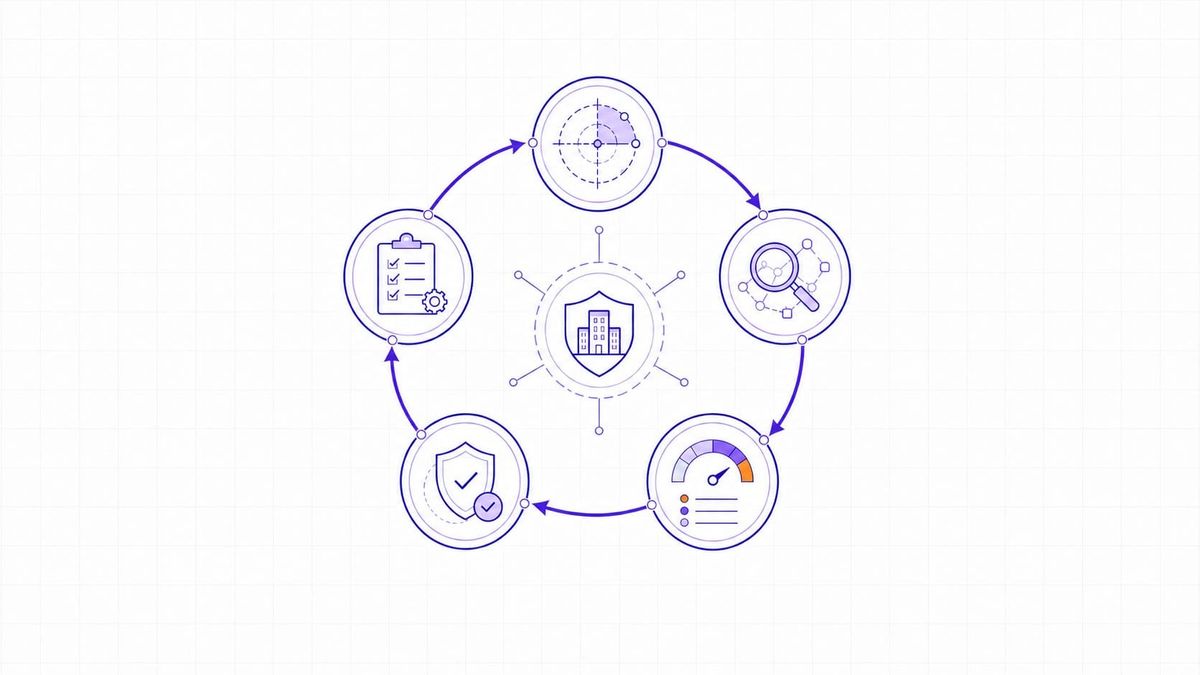
Vulnerability management is a continuous process for identifying, evaluating, prioritizing, remediating, and verifying weaknesses in systems and software. Findings may include vulnerable packages, missing patches, weak configurations, exposed services, or application flaws.
Scanning supplies much of the evidence, but a scanner report is not the whole program. A working cycle includes:
- Maintain asset scope. Record the systems, applications, repositories, cloud resources, and other assets that need assessment. Unknown or unowned assets create gaps before scanning even begins.
- Find and validate weaknesses. Use suitable assessment methods, remove duplicates and false positives, and confirm that a finding applies to a live asset. The method may include authenticated, unauthenticated, application, dependency, or external scanning.
- Set remediation priorities. Combine technical severity with internet exposure, active exploitation, asset criticality, and the effect of existing controls. CVSS is useful input, but it is not a complete risk decision.
- Remediate or mitigate. Patch software, change configuration, restrict access, disable an unused service, or apply a temporary control when an immediate patch is unsafe or unavailable.
- Verify and report. Rescan or test the affected asset, confirm that the exposure has closed, record exceptions, and track recurring issues and overdue work.
NIST describes enterprise patch management as identifying, prioritizing, acquiring, installing, and verifying patches, updates, and upgrades. It also frames patching as preventive maintenance that needs an organization-wide strategy, rather than a sequence of isolated emergency tasks.
Teams that need more detail on assessment methods can read our guide on how vulnerability scanning works.
What Exposure Management Adds
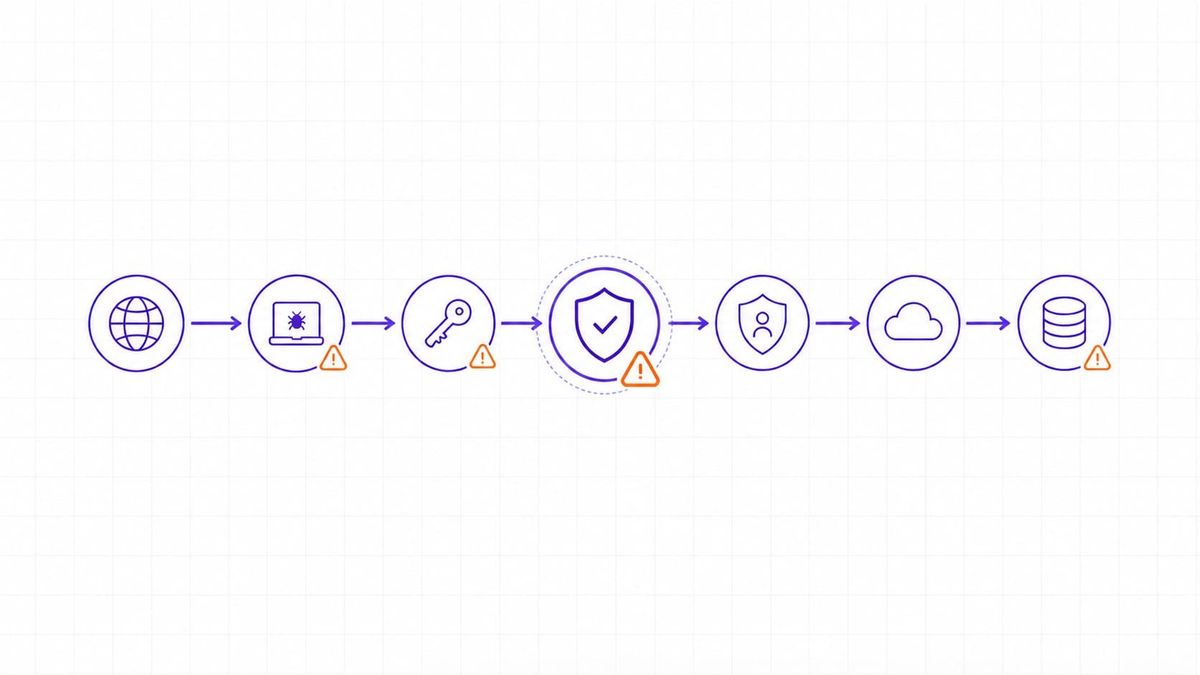
Exposure management broadens the unit of analysis. Instead of beginning and ending with individual vulnerabilities, it evaluates the conditions that could let an attacker reach, misuse, or damage an asset. Those conditions may involve software flaws, misconfigurations, public accessibility, excessive permissions, leaked credentials, weak segmentation, unowned assets, third-party connections, or ineffective controls.
Gartner describes continuous threat exposure management, or CTEM, as an approach for continually evaluating the accessibility, exposure, and exploitability of digital and physical assets. It also recommends aligning assessment and remediation with threat vectors or business projects, rather than looking only at infrastructure components.
In operational terms, exposure management adds four kinds of context:
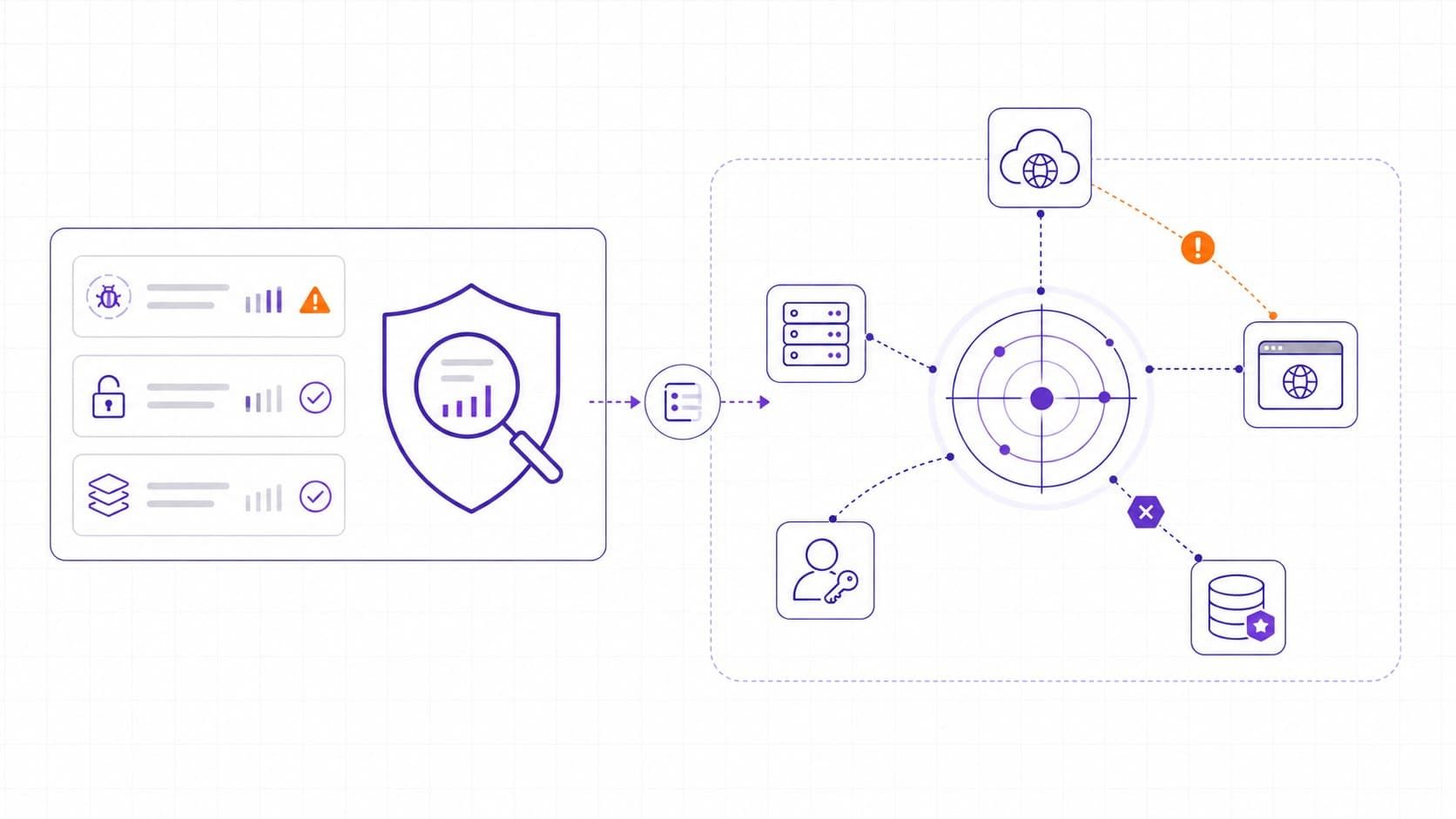
- Visibility beyond the known inventory. External discovery can reveal forgotten subdomains, cloud endpoints, old test environments, or vendor-managed services that are absent from the configuration database. These assets cannot enter a remediation queue until someone finds them.
- Reachability and attack paths. A weakness becomes more urgent when an attacker can reach it from the internet or use it to move toward sensitive data, administrative access, or a critical service. Segmentation and access controls can change that path even before a patch is applied.
- Threat and business context. Evidence of exploitation, the asset's function, data sensitivity, owner, and operational constraints affect the order of work. CISA recommends using its Known Exploited Vulnerabilities Catalog as an input to vulnerability prioritization.
- More remediation options. Exposure reduction may mean patching, but it may also mean removing public access, rotating a token, tightening permissions, retiring an asset, adding segmentation, or applying another compensating control.
Attack surface management is a major input to exposure management because it discovers and monitors potential entry points. Exposure management has a wider decision scope: it connects those entry points and other security conditions to credible attack paths and business consequences.
Exposure Management and Vulnerability Management Compared
The clearest difference is the object being managed. VM manages weaknesses and the work needed to resolve them. EM manages paths and conditions that create material risk. This distinction affects scope, priority, remediation, and measurement.
|
Decision Area |
Vulnerability Management |
Exposure Management |
|
Primary question |
Which weaknesses affect our assets, and how should we fix them? |
Which reachable conditions create credible paths to important business assets, and where should we interrupt them? |
|
Starting scope |
Known systems, applications, packages, and configurations |
Known and unknown assets, identities, relationships, controls, and attacker-reachable paths |
|
Main evidence |
Scan results, CVEs, configuration findings, validation, and patch data |
VM findings plus attack surface data, reachability, threat activity, control effectiveness, asset criticality, and ownership |
|
Prioritization |
Severity, exploitability, exposure, affected asset, and remediation deadlines |
Likely attack path, business impact, accessibility, control gaps, and the most efficient risk-reduction action |
|
Typical action |
Patch, upgrade, reconfigure, accept an exception, or verify a fix |
Patch, restrict access, segment, rotate credentials, retire an asset, strengthen a control, or redesign a risky path |
|
Useful measures |
Time to remediate, overdue findings, recurrence, verification rate, and coverage |
Time to discover and assign exposure, unowned exposed assets, open high-impact paths, repeat exposure, and verified risk reduction |
The boundary is not absolute. Mature vulnerability management already uses exposure and threat context, while exposure management depends heavily on good vulnerability data. The comparison is useful because it shows where teams need to extend their decisions, not because it creates two isolated programs.
A Real Incident Shows Why Both Views Matter
In 2023, the Cl0p ransomware group exploited CVE-2023-34362 in internet-facing MOVEit Transfer applications. CISA and the FBI reported that affected applications were infected with the LEMURLOOT web shell, which was used to steal data from underlying databases.
The VM decision was direct: determine whether the vulnerable product was present, apply the vendor's fix or mitigation, investigate affected systems, and verify remediation. The exposure decision was broader: identify every internet-facing instance, confirm ownership, assess what data each instance could reach, check whether controls reduced accessibility, and prioritize the systems with the most consequential path.
This case gives teams a practical rule for new critical disclosures: do not sort by CVSS alone. First identify affected assets, then ask which instances are reachable, exploited in the wild, connected to sensitive data, or missing effective controls. CISA's KEV signal should take precedence over a prediction score when exploitation is already confirmed. FIRST also cautions that EPSS estimates exploitation probability and is not a complete risk score because it does not include environmental impact or compensating controls.
When Vulnerability Management Is the Immediate Priority
Start with VM when the main problem is an unreliable or incomplete remediation cycle. Common signs include unmanaged patch backlogs, inconsistent scanning, unclear finding ownership, recurring vulnerabilities, and fixes that are never verified.
VM should receive immediate attention in these situations:
- A newly disclosed flaw affects a known product. Identify affected versions, validate exposure, use exploitation evidence to set urgency, and track the fix through rescanning. This is a bounded technical problem with a clear remediation workflow.
- Audits reveal weak patch or configuration hygiene. Build repeatable inventory, assessment, ownership, exception, and verification steps before adding a broader exposure model. Exposure analysis cannot compensate for findings that nobody closes.
- Development teams lack a common intake process. Normalize results from infrastructure, application, and dependency tools, remove duplicates, assign owners, and define service levels. The purpose is to create an accountable flow from detection to evidence of closure.
Editorial judgment: a small team should avoid launching a complex exposure program while its basic remediation queue is unreliable. Begin with the minimum VM loop that produces verified fixes, then add exposure context where it changes a real priority or action.
When Exposure Management Changes the Decision
EM becomes necessary when a vulnerability list no longer represents the organization's real risk. This often happens in dynamic cloud environments, after acquisitions, or when internet-facing assets change faster than the internal inventory.
Use an exposure view when:
- Unknown assets keep appearing. External discovery and ownership checks should precede prioritization. A high-risk service outside the inventory will not be fixed by improving the ranking of known CVEs.
- The same finding has different consequences across assets. A flaw on a public identity gateway and the same flaw on an isolated lab host require different urgency. Reachability, privilege, data access, and business function explain the difference.
- The fastest risk reduction is not a patch. Restricting public access, disabling an abandoned service, rotating a credential, or adding segmentation may break an attack path sooner. The patch can then follow through the normal change process.
- Leadership needs evidence of reduced exposure. Counts of open findings may rise after coverage improves. Pair them with ownership, reachability, recurrence, remediation time, and the status of high-impact paths to show whether risk is actually being reduced.
TopScan's attack surface management platform focuses on discovering and monitoring internet-facing assets.
For teams deciding how internal and attacker-visible coverage fit together, the guide to internal and external vulnerability scanning explains the different questions each scan type answers.
How to Combine VM and EM in One Workflow
Most small and mid-sized teams do not need two competing queues. They need one workflow enriched with better context.
Begin with a reliable inventory of managed assets and an external view of what an attacker can see. Send validated vulnerability and configuration findings into a common backlog. Add four decision fields that can change priority: external or internal reachability, exploitation evidence, business criticality, and control status. Assign an owner and a target date to every accepted action.
For a high-priority item, choose the action that reduces exposure safely and quickly. That may be a patch, a configuration change, access restriction, segmentation, credential rotation, or asset retirement. If a compensating control is temporary, record its owner and expiration condition so that it does not silently become permanent.
After the change, verify the result from the relevant perspective. A patch check confirms version state, but an external rescan may be needed to confirm that the service is no longer reachable. Close the item only when the evidence matches the intended risk reduction.
Review the workflow using a small set of decision-oriented measures: coverage of critical assets, internet-facing assets without owners, remediation time for exploited vulnerabilities, repeat findings, expired exceptions, and verified closure. These measures connect VM execution with EM outcomes without requiring an elaborate new reporting layer.
Strong VM Execution Is the Foundation for Exposure Reduction
Vulnerability management and exposure management are complementary. VM supplies the discipline for finding, owning, fixing, and verifying weaknesses. EM adds the broader view needed to discover missing assets, understand attacker reachability, compare business consequences, and choose controls beyond patching.
For a resource-constrained team, the next step is concrete: make the VM loop dependable, then enrich each priority decision with exposure, exploitation, asset criticality, and control context. The program succeeds when high-impact paths close and stay closed, not when the dashboard contains the largest number of findings.