
Vulnerability management is the continuous process of discovering assets, identifying security weaknesses, deciding which ones create the most risk, and tracking remediation through verification. It covers more than running a scanner: a useful program assigns ownership, sets response expectations, records exceptions, and checks whether a fix worked.
For a small software team, the distinction matters. A scan can show a missing patch on a server. Vulnerability management connects that finding to the server's internet exposure, the service owner, a remediation deadline, and a follow-up scan. The result is a repeatable way to reduce known exposure as infrastructure and software change.
Vulnerability management combines discovery, decisions, and follow-through
The process begins with knowing what exists. That includes public domains and IP addresses, cloud resources, applications, APIs, endpoints, and software dependencies within the agreed scope. If an asset is missing from the inventory, a scanner cannot assess it and no one will own its findings.
Vulnerability management then uses scans, vendor advisories, and other evidence to identify potential weaknesses. A finding must be reviewed and prioritized in its environment. A CVSS score is useful severity information, but it does not show whether the affected asset is public, critical to the business, or protected by compensating controls.
For a closer explanation of the identifiers and scores involved, see CVE vs CVSS.
The final part is operational: fix or mitigate the issue, document a justified exception when appropriate, and verify the outcome. NIST describes patch management as identifying, prioritizing, acquiring, installing, and verifying patches. Patching is one response to software risk, alongside mitigation, acceptance, transfer, or avoiding the affected technology.
The vulnerability management lifecycle
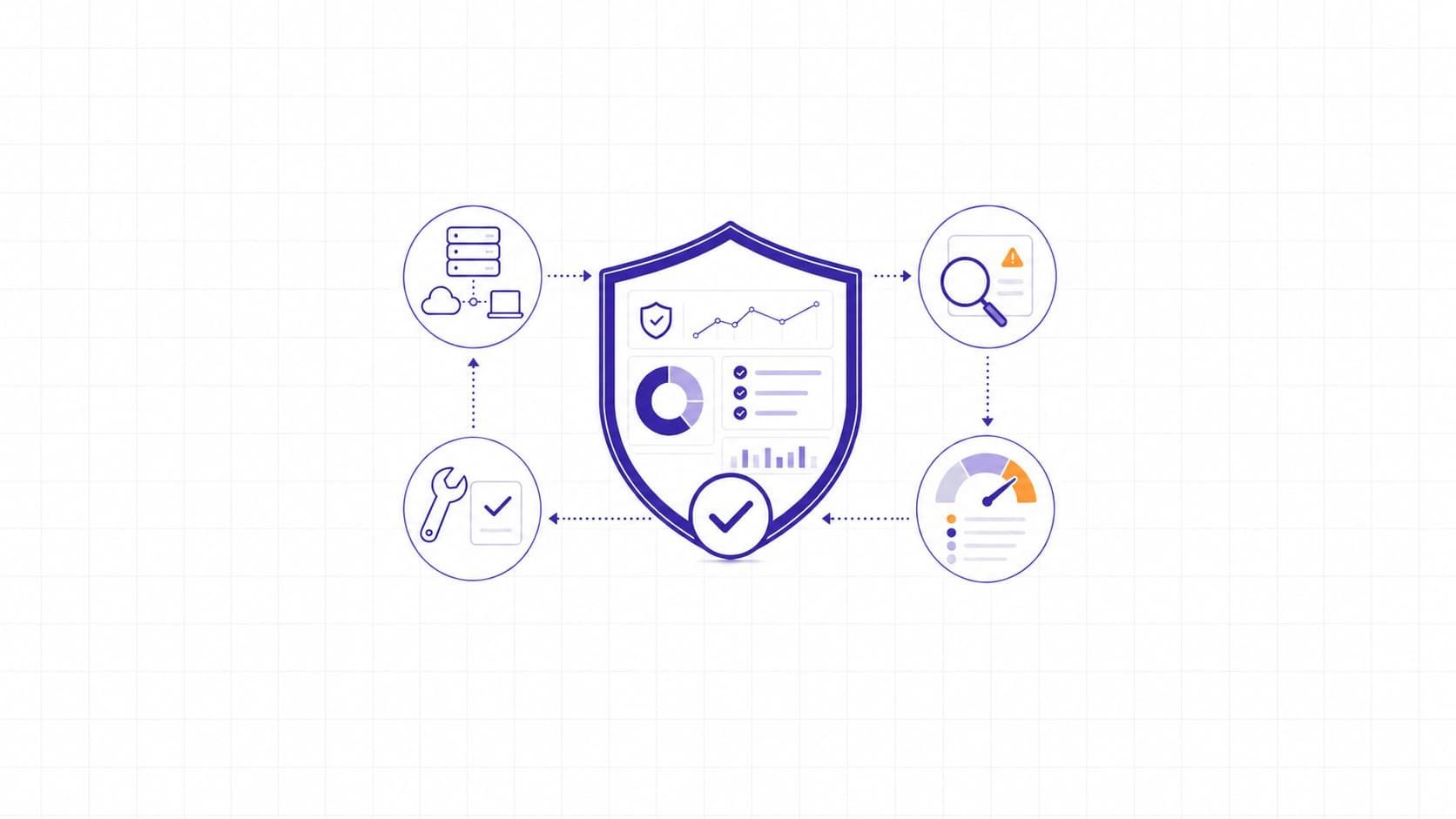
The lifecycle is continuous because assets, software versions, configurations, and threat activity change. A team can use the following cycle as a practical operating model.
|
Stage |
What the team does |
Useful output |
|
Discover and scope |
Maintain an inventory of assets and define what the program covers, including owners and scan access. |
Current asset list and accountable owners. |
|
Detect and validate |
Scan approved targets, ingest relevant advisories, and investigate likely false positives. |
Findings with enough evidence to act. |
|
Prioritize |
Combine severity with exposure, exploit evidence, asset value, and existing controls. |
Ordered remediation queue and deadlines. |
|
Remediate or mitigate |
Patch, upgrade, change configuration, restrict access, or apply a temporary compensating control. |
A recorded action, owner, and due date. |
|
Verify and report |
Re-scan or test the fix, close only confirmed findings, and report aging and exceptions. |
Verified closure and risk trend data. |
Asset discovery prevents blind spots
Asset discovery should cover the systems that matter to the program, not just a manually maintained server list. In a SaaS environment, that often means domains, public IPs, cloud endpoints, repositories, web applications, APIs, and third-party services where the team has a security responsibility. Owners should be attached early, because a finding without an owner tends to sit in a queue.
Internet-facing assets deserve particular attention because they are reachable by external attackers. Attack surface management complements vulnerability management by showing what is exposed before a vulnerability is even considered. Teams that need a continuously updated view of public infrastructure can also use asset discovery and perimeter monitoring.
Detection needs validation and context
A vulnerability scanner compares evidence from a target with information about known issues and configurations. It is one important input, not a final verdict. Scan results can be incomplete or inaccurate, particularly when a target is unreachable, software is custom-built, or an unauthenticated scan has limited visibility.
Learn more about the mechanics and limits in What Is Vulnerability Scanning?
Validate the finding before spending engineering time. Confirm the affected product and version, whether the service is exposed, and whether a vendor fix or workaround applies. Avoid intrusive testing in production unless it is authorized and planned.
Prioritization should reflect the risk to this organization
Risk-based prioritization prevents teams from treating every high score as equally urgent. A practical priority decision considers:
- Exploitation evidence. Check whether there is reliable evidence of active exploitation, a public proof of concept, or a relevant threat advisory. CISA's Known Exploited Vulnerabilities Catalog is one authoritative input for known active exploitation.
- Exposure and reachability. A vulnerable public VPN or administrative interface may require faster action than the same software on an isolated test host.
- Business impact. Consider the data, service, and business process on the affected asset. A customer-facing production system is not equivalent to a disposable development environment.
- Mitigations and fixability. Network segmentation, disabled features, access restrictions, or a vendor workaround can reduce interim risk, but they should have an owner and an expiration review.
CVSS provides a common way to describe technical severity. Teams can add exploitation-probability signals such as EPSS when relevant, but neither score replaces local context and engineering judgment.
Remediation connects vulnerability management with engineering work
Remediation is not limited to installing a patch. Depending on the finding and the environment, the action may be a version upgrade, a configuration change, removal of an unnecessary service, credential rotation, network segmentation, or a temporary restriction while a vendor fix is tested. The chosen response should state who owns it, when it is due, and how the team will confirm it.
Patch management is a core part of the workflow. It provides the process to test, deploy, and verify updates; vulnerability management tells the team which updates and systems need attention first. NIST recommends maintaining asset and software inventories, defining risk-response scenarios, and verifying deployment. Those practices are particularly useful when an urgent patch could interrupt a production service.
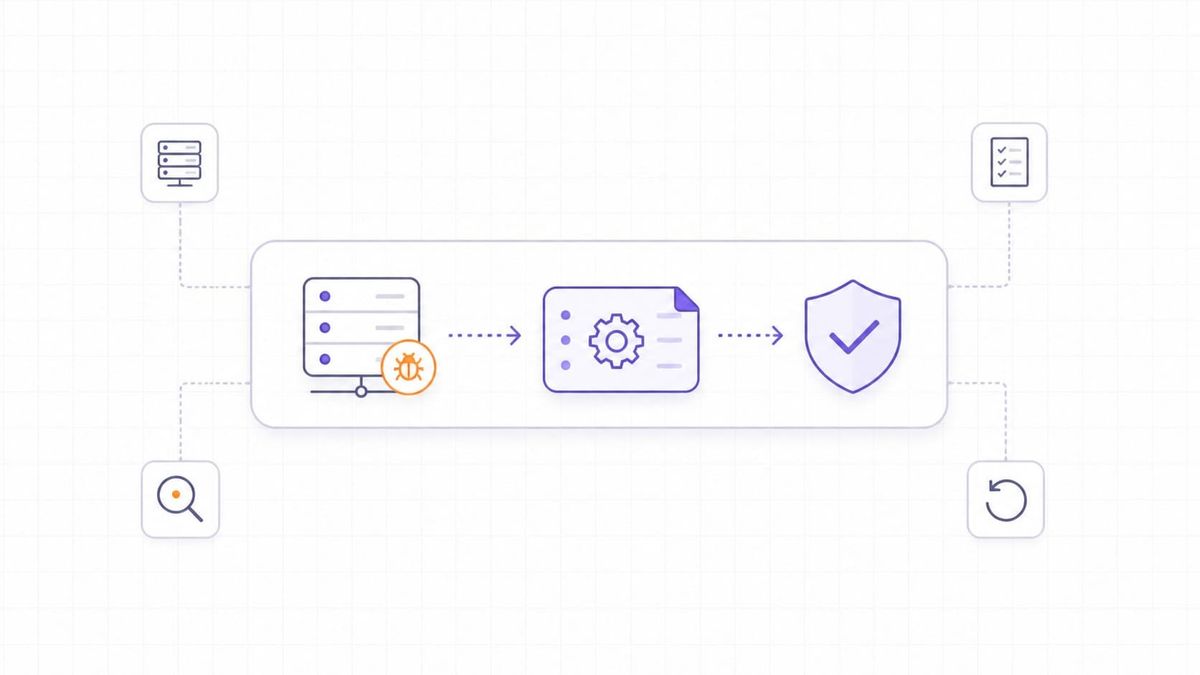
For example, a team may find an exposed remote-access service affected by a vulnerability with credible exploitation reports. The immediate action might be to restrict access to trusted networks and disable an unneeded feature. The permanent action may be a tested vendor update. The finding should remain open until a re-scan or other validation confirms the risky condition is gone.
Continuous management fits changing infrastructure
Annual assessments and occasional scans have value, but they cannot keep pace with a changing external footprint. Continuous vulnerability management ties checks to events that alter exposure: a new domain, cloud account, public API, dependency update, production release, or vendor advisory affecting software in use.
Automation can create tickets, route findings to service owners, notify a team about overdue high-risk items, and schedule follow-up scans. It should not automatically apply every patch to production. Mature workflows distinguish low-risk, well-tested actions from changes that require approval, maintenance windows, or rollback planning.
Teams that build and deploy software frequently can also place security checks in CI/CD. Dependency and static code checks can catch issues earlier, while external scanning checks the deployed environment. These controls answer different questions and work best when their findings reach a shared remediation workflow.
A small team can start with an owned, measurable program
An effective first version does not require a large security department. Start with a narrow, high-value scope and make the process reliable before expanding it.
- Define the initial scope. Begin with internet-facing production systems, their owners, and the approved scanning method. Add internal and cloud assets as the program can support them.
- Set response rules. Define what qualifies as urgent, who can accept risk, how long an exception lasts, and when a finding is due for review.
- Create a single remediation queue. Link evidence, owner, due date, status, and verification record so the same issue is not lost across spreadsheets, scanner dashboards, and chat messages.
- Track a few decision-ready metrics. Measure overdue high-risk findings, time to remediate by priority, verified closure rate, and assets without a known owner. Review trends with engineering and leadership.
The TopScan vulnerability management platform supports this workflow with finding status, severity-based SLA timers, and a workspace-level Security Score. It helps teams monitor internet-facing assets, prioritize findings, track remediation from scan to verified resolution, and keep overdue work visible. It does not replace incident response, forensic investigation, or a compliance decision.
A repeatable workflow reduces exposure over time
Vulnerability management works when security findings become visible, owned engineering work with a confirmed outcome. Keep the inventory current, validate the evidence, prioritize with business context, choose a proportionate response, and check the result. That loop gives a growing organization a defensible way to reduce known weaknesses without pretending that every alert or every score has the same meaning.